




What's Happening?
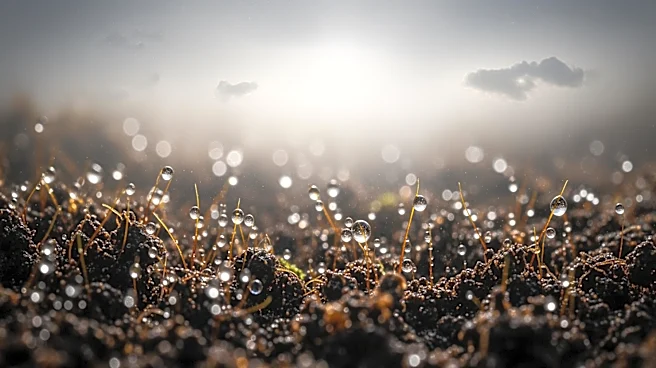
A recent study has uncovered that tiny soil microbes, including bacteria and fungi, have the ability to influence rain formation. These organisms release ice-nucleating proteins that act as 'seeds' for water molecules in clouds, facilitating the crystallization
process necessary for rain. This discovery highlights the role of biological processes in atmospheric phenomena, with fungi like Fusarium and Mortierella playing a significant part. These proteins are more effective than traditional particles like dust and soot, as they can induce ice formation at relatively warmer temperatures.
Why It's Important?
The findings offer new insights into the complex interactions between biological organisms and climate systems. Understanding these processes could lead to innovative approaches in weather modification and climate management. The potential applications of this research are vast, including eco-friendly cloud seeding techniques and improved agricultural practices. By leveraging natural, biodegradable proteins, it may be possible to enhance rainfall in drought-prone areas or protect crops from frost, offering sustainable solutions to pressing environmental challenges.
Beyond the Headlines
This research adds a new dimension to the understanding of the biosphere's influence on climate. It suggests that even microorganisms in the soil can have a significant impact on weather patterns, challenging traditional views of atmospheric science. The study also raises questions about the ecological balance and the potential consequences of disrupting these natural processes through deforestation or land-use changes. As climate change continues to pose global challenges, such discoveries could inform more holistic and sustainable environmental policies.