








What's Happening?
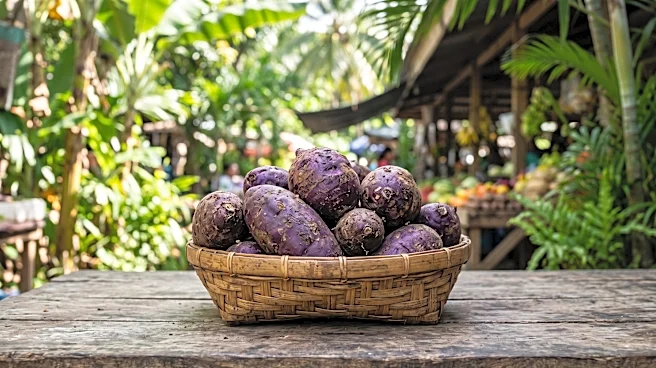
The United States Department of Agriculture (USDA) has announced a $34.1 million grant to support the development of the ube sector in the Philippines. This funding complements a P300-million initiative by the Philippine government aimed at expanding
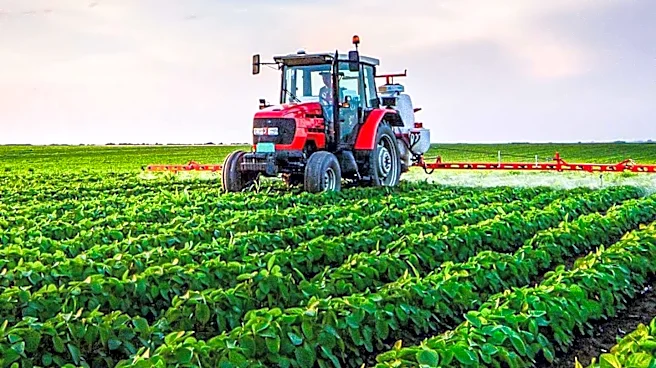
ube production to meet increasing global demand for the purple yam. The five-year Food for Progress Program, funded by the U.S., is projected to benefit over 12,500 Filipino farmers and enhance the country's involvement in international food and beverage supply chains. US-based nonprofit TechnoServe will be responsible for implementing the project, providing technical expertise for industry development. The initiative is financed through the proceeds from the sale of nearly 40,000 metric tons of American soybean meal, linking U.S. agricultural exports with agricultural development in the Philippines. Philippine Agriculture Secretary Francisco P. Tiu Laurel Jr. expressed gratitude for the U.S. support, highlighting its role in increasing production, improving farmers' incomes, and fostering rural development by connecting growers to expanding overseas markets.
Why It's Important?
This USDA grant signifies a strategic investment in agricultural development that extends beyond direct aid, leveraging U.S. agricultural exports to foster economic growth in partner nations. By boosting the Philippine ube sector, the initiative aims to create new market opportunities for a high-value crop, which can lead to increased trade and economic stability. For the U.S., this program facilitates the sale of American soybean meal, demonstrating how agricultural trade can be integrated with development goals. The project's focus on strengthening the entire value chain, from farmers to international markets, could serve as a model for future U.S. foreign aid and trade policies, emphasizing sustainable development and mutual economic benefits. The success of this program could also influence U.S. agricultural policy by showcasing the potential for linking commodity sales with targeted development assistance, thereby expanding the reach and impact of American agricultural products globally.
What's Next?
The five-year Food for Progress Program will be implemented by US-based nonprofit TechnoServe, which will provide technical expertise to support the development of the ube industry in the Philippines. The Philippine Department of Agriculture (DA) plans to gradually expand the industry, with an initial phase targeting a doubling of the area currently planted to ube, adding 1,000 hectares in the first year. The DA has budgeted approximately P850,000 per hectare for farm development, support facilities, and production, with the initial rollout timed for the November 2026 harvest and propagation cycle. Ten ube varieties have been identified for large-scale cultivation. The DA aims to build a more competitive ube industry while ensuring that demand does not outpace the country's capacity for sustainable supply, learning from past missteps with other high-value crops that experienced sudden surges in overseas demand.
Beyond the Headlines
The USDA's investment in the Philippine ube sector highlights a broader trend of leveraging agricultural development as a tool for international diplomacy and economic partnership. This initiative not only addresses food security and economic empowerment in the Philippines but also subtly promotes U.S. agricultural interests through the sale of soybean meal. The program's emphasis on strengthening the entire value chain, from cultivation to export, reflects a comprehensive approach to development that seeks to create sustainable economic ecosystems rather than just providing short-term aid. This model could have long-term implications for how the U.S. engages with developing nations, fostering self-sufficiency and creating new markets for both U.S. and local products. The focus on a specific, high-demand crop like ube also demonstrates an understanding of global market trends and the potential for niche agricultural products to drive significant economic growth.