

What's Happening?
NASA is preparing for the launch of the Artemis II mission, which is set to take place no earlier than April 1, 2026, from the Kennedy Space Center in Florida. The mission will involve the Space Launch System (SLS) rocket carrying the Orion spacecraft,
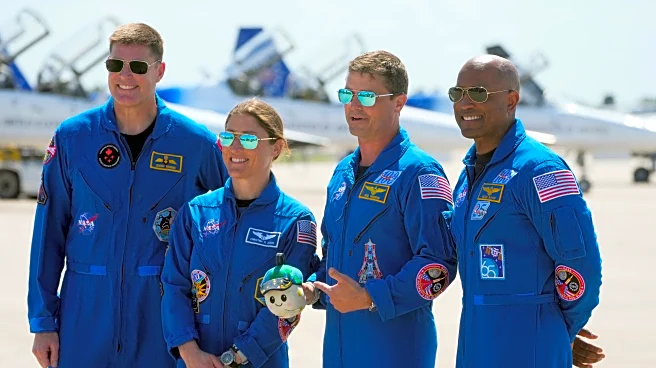
with a crew consisting of Commander Reid Wiseman, Pilot Victor Glover, and Mission Specialist Christina Koch from NASA, along with Mission Specialist Jeremy Hansen from the Canadian Space Agency. The mission aims to take the crew around the Moon and back to Earth. Current weather forecasts indicate an 80% chance of favorable conditions for the launch, with cloud coverage and potential high winds being the primary concerns. NASA is closely monitoring the weather and will provide updates through a news conference.
Why It's Important?
The Artemis II mission is a critical step in NASA's efforts to return humans to the Moon and eventually establish a sustainable presence there. This mission will test the capabilities of the SLS rocket and Orion spacecraft in a crewed flight, paving the way for future lunar exploration. Successful execution of this mission could bolster international collaboration in space exploration, as evidenced by the involvement of the Canadian Space Agency. It also represents a significant milestone in advancing human space travel technology, potentially leading to new scientific discoveries and technological innovations.
What's Next?
Following the launch, NASA will continue to monitor the mission's progress and provide updates on its status. The success of Artemis II will influence the timeline and planning of subsequent Artemis missions, including the goal of landing the first woman and the next man on the Moon. Stakeholders, including international space agencies and private sector partners, will be watching closely to assess the mission's outcomes and implications for future collaborations.