
What's Happening?
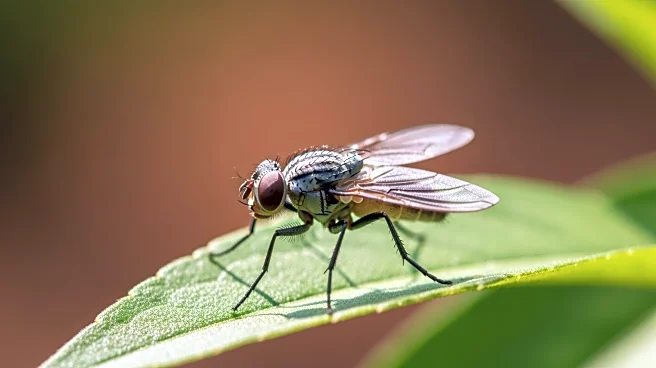
The U.S. Department of Agriculture (USDA) is releasing sterile, glow-in-the-dark flies near the U.S.-Mexico border and in southern Texas to combat the spread of New World screwworm pests. These parasitic
flies lay eggs in the wounds of warm-blooded animals, often livestock, leading to severe infestations. The USDA has halted imports of Mexican livestock to prevent the pest from entering the U.S., exacerbating a cattle shortage and driving beef prices to record highs. The sterile flies, which are produced at a facility in Panama, are treated with fluorescent dye to distinguish them from wild flies. This initiative aims to create a buffer zone to prevent the pest from moving northward, following reports of screwworm infestations in the Mexican state of Tamaulipas.
Why It's Important?
The USDA's action is crucial in protecting the U.S. livestock industry from the devastating effects of screwworm infestations, which can lead to significant economic losses. The halt in livestock imports from Mexico has already contributed to a cattle shortage, affecting beef prices and the meatpacking industry. By releasing sterile flies, the USDA aims to control the pest population and prevent further economic impact. This measure also aligns with Mexico's technical proposals to address the issue, highlighting the importance of cross-border cooperation in managing agricultural pests.
What's Next?
The USDA plans to continue releasing sterile flies to establish a protective buffer zone along the border. The agency is also considering building a production facility in Texas to increase sterile fly production, although this is at least a year away. The ongoing cold weather in Texas may temporarily slow the pest's movement, but the USDA remains vigilant in monitoring and responding to new infestations. The meatpacking industry, represented by companies like Tyson Foods, is closely watching the situation, as the reopening of the border for livestock imports remains uncertain.