



What's Happening?
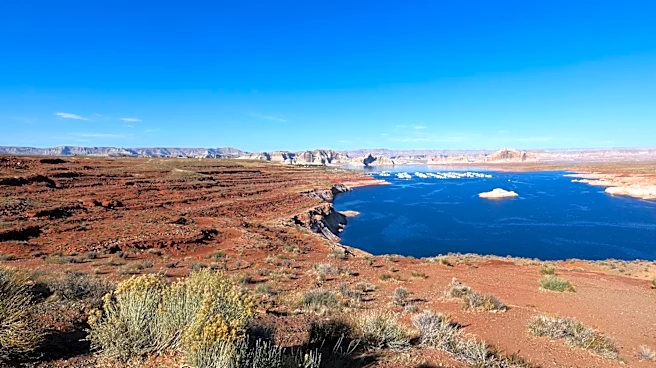
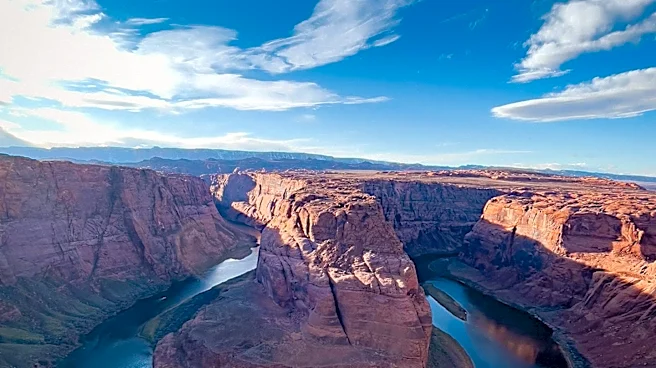
Researchers at the University of Colorado have issued a warning about a potential 'system crash' of the Colorado River system by 2028. The report highlights the ongoing decline in water storage levels at Lake Mead and Lake Powell, the two largest reservoirs
in the basin. Despite conservation efforts, water usage continues to exceed natural inflows, leading to a persistent drop in reservoir levels. The study identifies 2026 as a particularly low runoff year, exacerbating the imbalance between water supply and demand. If current trends continue, the reservoirs could be depleted, forcing 'run-of-the-river' operations where water flows directly downstream without storage. This scenario poses severe risks to cities, agriculture, and ecosystems in the American West and parts of Mexico that rely on the Colorado River.
Why It's Important?
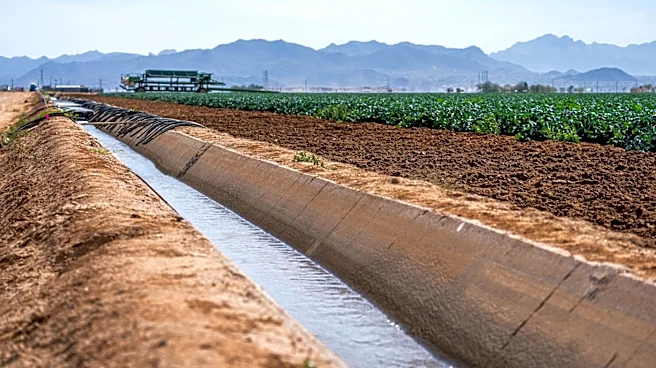
The potential depletion of the Colorado River's reservoirs could have devastating consequences for millions of people and vast agricultural economies dependent on this critical water source. The report underscores the unsustainable nature of current water use across the basin, calling for significant reductions in consumption. Without coordinated action, the infrastructure supporting the Colorado River could fail, leading to a prolonged water crisis. This situation highlights the urgent need for policy changes and conservation measures to ensure the long-term reliability of water supplies in the region.
What's Next?
The report calls for immediate and coordinated reductions in water consumption across the Upper and Lower Basin states, as well as Mexico. Policymakers and stakeholders must address the unsustainable water use to prevent the system from reaching a critical threshold. The potential for a 'system crash' by 2028 necessitates urgent action to implement conservation strategies and manage water resources more effectively. The situation demands collaboration among states and international partners to secure the future of the Colorado River system.