



What's Happening?
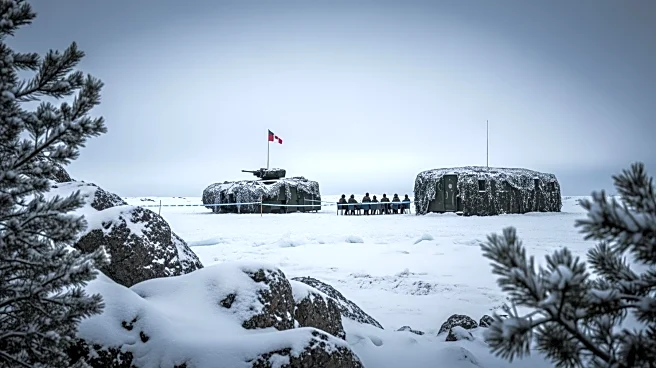
The UK Ministry of Defence has announced a significant increase in its military presence in the Norwegian Arctic, doubling the number of troops from 1,000 to 2,000 over the next three years. This decision comes in response to Russia's military buildup
in the region, including the reopening of Cold War-era bases and the deployment of S-400 air defense units. The UK aims to enhance its strategic position in the High North, a region of growing geopolitical interest due to its economic and strategic significance. The UK will also participate in joint military exercises with NATO allies, such as Cold Response and Lion Protector, to strengthen defense capabilities against potential Russian aggression.
Why It's Important?
The UK's decision to bolster its military presence in the Arctic underscores the increasing geopolitical tensions in the region. As the Arctic becomes more accessible due to climate change, it has emerged as a strategic hotspot for global powers, including Russia, China, and the United States. The UK's move is a direct response to Russia's aggressive military posture, which poses a threat to NATO allies and critical infrastructure. This development highlights the importance of international cooperation in maintaining regional stability and deterring potential conflicts. The increased military presence also reflects the UK's commitment to supporting NATO's strategic objectives and ensuring the security of its allies.
What's Next?
The UK will continue to engage in joint military exercises with NATO allies to enhance interoperability and readiness in the Arctic region. The upcoming exercises, Cold Response and Lion Protector, will involve multiple allied nations and focus on defending strategically important locations. The UK is also likely to strengthen its partnerships with Norway and other Arctic nations to address shared security concerns. As geopolitical tensions persist, the UK and its allies will need to remain vigilant and adaptable to evolving threats in the region. The situation may also prompt further discussions within NATO on how to effectively counter Russian influence in the Arctic.