






What's Happening?
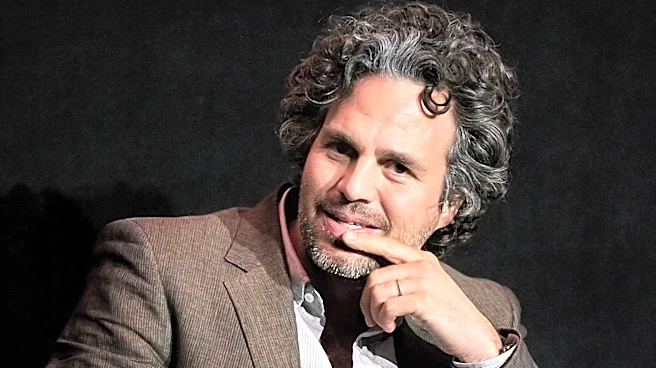
Avi Issacharoff, co-creator of the Israeli action series 'Fauda,' has publicly criticized American actor and producer Mark Ruffalo, calling him 'a rare combination of ignorant and stupid.' This strong condemnation stems from Ruffalo's repeated assertions
of 'genocide' in Gaza. Issacharoff's remarks were made at a recent event in London, where he questioned Ruffalo's understanding of the term 'genocide,' especially in light of Israel allowing daily aid trucks into Gaza and the reported birth rates during the conflict. This controversy follows a previous incident where Ruffalo accused a Jewish Paramount Pictures board member of 'gloating' over 'genocide' in connection with a business transaction. Paramount Pictures subsequently criticized Ruffalo's use of terms like 'genocide' and 'apartheid,' labeling it as incitement to antisemitism, a charge Ruffalo dismissed as 'atrocious and fundamentally dishonest.'
Why It's Important?
This public dispute highlights the deep divisions and intense emotions surrounding the Israeli-Palestinian conflict, particularly within the entertainment industry and public discourse in the U.S. Mark Ruffalo's prominent platform as a Hollywood actor means his statements carry significant weight, influencing public opinion and potentially shaping narratives. The accusation of antisemitism by Paramount Pictures and the subsequent backing by the Simon Wiesenthal Center underscore the sensitivity and gravity of such claims. This incident also reflects a broader trend where public figures are increasingly scrutinized for their political and social stances, leading to potential professional repercussions and heightened tensions between different advocacy groups. The debate over the appropriate use of terms like 'genocide' and 'apartheid' in this context is crucial, as it impacts how the conflict is perceived and discussed globally.
What's Next?
The ongoing public debate is likely to continue, with both sides reiterating their positions. Mark Ruffalo may face further criticism or support from various organizations and individuals, potentially impacting his professional relationships and public image. The entertainment industry, particularly studios like Paramount, will likely remain cautious in navigating such politically charged statements from their talent. This incident could also prompt more public figures to either double down on their activism or become more circumspect in their public comments regarding the Israeli-Palestinian conflict. The release of 'Fauda's' fifth season globally on Netflix may also bring renewed attention to Issacharoff's perspective, further fueling the discussion.
Beyond the Headlines
This controversy delves into the complex interplay between celebrity influence, political activism, and the interpretation of international conflicts. It raises questions about the responsibility of public figures to accurately represent facts and the potential for their statements to be perceived as inflammatory or antisemitic. The incident also highlights the challenge of maintaining nuanced discussions in an era of rapid information dissemination and polarized opinions. The use of terms like 'genocide' and 'apartheid' in public discourse, especially by influential figures, can have profound ethical and legal implications, potentially contributing to misinformation or exacerbating existing tensions. This situation underscores the broader societal struggle to engage in constructive dialogue on highly sensitive geopolitical issues.