



What's Happening?
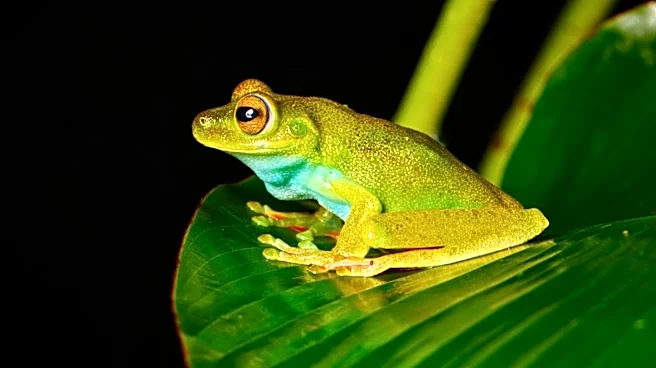
A rare blue Darwin's frog (Rhinoderma darwinii) has been observed in Chile's Aysen Region, specifically within the Melimoyu reserve. This unusual specimen, a male measuring 27.01 millimeters and weighing 1.83 grams, was discovered by photographer and environmental
educator Jaime Beltrand during fieldwork. The striking blue coloration is particularly noteworthy as Darwin's frogs are typically green and brown. This is the first time such a pronounced blue hue has been recorded in the area despite over a decade of monitoring. The frog was also found carrying approximately four larvae in its vocal sac, a unique reproductive behavior where males nurture developing larvae internally. Researchers, including Andres Valenzuela, president of the Darwin's Frog NGO, suggest the unusual color may stem from changes in skin pigments, possibly a reduction in yellow pigmentation that reveals underlying blue tones. The specimen still exhibits some green areas, indicating a potentially incomplete loss of yellow pigment.
Why It's Important?
The discovery of this blue Darwin's frog is significant for biological research and conservation efforts, particularly for threatened species. For the U.S. and global scientific community, this finding offers a unique opportunity to study genetic variations and environmental factors influencing amphibian coloration. Understanding these mechanisms could provide insights into evolutionary biology and adaptation, which are crucial for conservation strategies worldwide. The Darwin's frog, native to the temperate forests of Chile and Argentina, faces threats like habitat loss. Therefore, long-term monitoring and the study of such unusual specimens are vital for documenting population changes and enhancing knowledge about the species' biology. This research could inform broader conservation practices applicable to other endangered amphibian species, some of which are also found in U.S. ecosystems, highlighting the interconnectedness of global biodiversity challenges.
What's Next?
Scientists will continue to investigate the biological reasons behind the blue coloration of this Darwin's frog. Key questions include determining whether the unusual characteristic is genetic and can be passed on to future generations. Researchers will also aim to understand the specific pigment changes involved and any environmental factors that might contribute to this phenomenon. Long-term monitoring of Darwin's frog populations in the Melimoyu reserve and other habitats will be crucial to track any further occurrences of this blue variant and to assess the overall health and genetic diversity of the species. The findings from this research could lead to updated conservation strategies for Darwin's frogs and potentially other threatened amphibian species globally, informing efforts to protect biodiversity in the face of habitat loss and climate change.
Beyond the Headlines
The emergence of this blue Darwin's frog transcends a mere biological curiosity; it underscores the subtle yet profound impacts of environmental shifts on species. While the immediate cause of the color variation is attributed to pigment changes, the broader context of a threatened species in a changing ecosystem invites deeper inquiry. Could this be an isolated genetic anomaly, or a nascent adaptive response to environmental pressures? The study of such unique individuals can serve as a biological barometer, offering early indicators of ecological changes that might otherwise go unnoticed. Furthermore, the public fascination with such rare discoveries can galvanize support for conservation, transforming an obscure amphibian into a symbol for broader biodiversity protection efforts. This event highlights the continuous, dynamic interplay between genetics, environment, and evolution, reminding us that nature's complexities are still largely unraveled, with each new discovery potentially holding keys to understanding life's resilience and vulnerability.