






What's Happening?
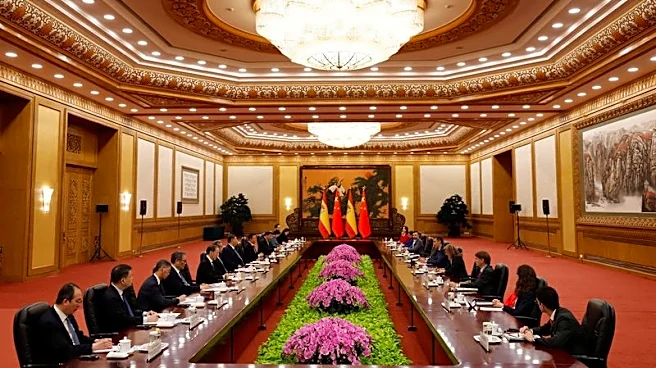
China and Cambodia have initiated their first '2+2' Strategic Dialogue Mechanism, involving both countries' foreign and defense ministers. This meeting, held in Phnom Penh, aims to deepen political and security ties between the two nations. Chinese Foreign
Minister Wang Yi and Defense Minister Dong Jun met with their Cambodian counterparts, Foreign Minister Prak Sokhonn and Defense Minister Tea Seiha. This initiative was proposed by Chinese President Xi Jinping to enhance the comprehensive strategic partnership between China and Cambodia. The dialogue follows China's efforts to expand its influence in Southeast Asia, having previously established a similar ministerial-level dialogue with Indonesia. During their visit, the Chinese ministers are also scheduled to meet with Cambodian Senate President Hun Sen and Prime Minister Hun Manet. The discussions are expected to focus on implementing existing cooperation frameworks and contributing to regional peace and stability.
Why It's Important?
The '2+2' dialogue between China and Cambodia is significant as it underscores China's growing influence in Southeast Asia, a region of strategic importance. Cambodia is China's closest political ally in the area, with China being its largest investor and aid donor. The bilateral trade between the two countries reached $19.73 billion last year, heavily favoring China. This close relationship has raised concerns among analysts and the U.S. government, particularly regarding the Chinese-funded expansion of Cambodia's Ream Naval Base. There are suspicions that the base could serve as a strategic military outpost for China, although Cambodian officials have denied such claims. The dialogue and subsequent meetings could further solidify China's presence and influence in the region, potentially impacting regional security dynamics and U.S. interests.
What's Next?
Following the '2+2' dialogue, Chinese Foreign Minister Wang Yi is scheduled to visit Thailand and Myanmar, indicating China's continued diplomatic engagement in Southeast Asia. The outcomes of these meetings could influence regional alliances and security arrangements. Additionally, the ongoing development of the Ream Naval Base will likely remain a point of contention, with the U.S. and other regional players closely monitoring the situation. The strategic partnership between China and Cambodia may lead to further economic and military collaborations, potentially reshaping the geopolitical landscape in Southeast Asia.