
What's Happening?
The concept of the Ground Loyal Wingman is emerging as a significant shift in modern warfare, transitioning from a futuristic idea to an operational necessity. This development involves integrating unmanned
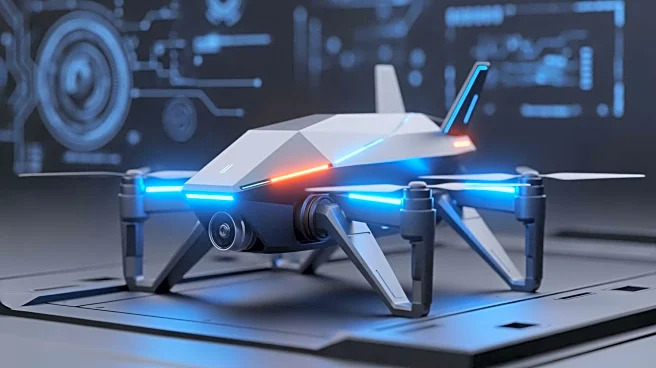
robotic platforms alongside manned ground vehicles, such as tanks and armored personnel carriers. These robotic platforms, known as Ground Loyal Wingmen, are designed to undertake dangerous, attritional, or technically complex missions, thereby extending detection and engagement ranges and enhancing operational effectiveness. The concept is driven by several strategic factors, including the difficulty in recruiting combat soldiers, the intensification of asymmetric threats, and the need for faster decision-making cycles on the battlefield. The Ground Loyal Wingman represents a move towards a hybrid human-machine force, where the manned vehicle acts as the leader, and the robotic platforms execute high-risk tasks.
Why It's Important?
The introduction of Ground Loyal Wingmen is poised to significantly impact military operations by reducing the risk to human lives and enhancing combat capabilities. These autonomous platforms are expected to perform 'dull, dirty, and dangerous' missions, thereby minimizing casualties and ensuring sustained operational continuity. The integration of robotic platforms offers strategic and tactical advantages, such as increased situational awareness, tactical flexibility, and accelerated decision-making processes. Additionally, the presence of these platforms alongside manned vehicles conveys technological superiority, boosting the confidence of soldiers and providing a psychological advantage. The cost-effectiveness of these platforms, being cheaper and simpler to produce and maintain than manned vehicles, further underscores their potential to transform military strategies.
What's Next?
As the Ground Loyal Wingman concept continues to develop, the focus will likely be on overcoming technological challenges, such as improving the autonomy of systems for complex ground missions and ensuring resilient communication and control. The military will need to address the cognitive load on operators managing multiple platforms and enhance the survivability of unmanned systems. The evolution of this concept is expected to reshape force structures, with units organized around paired formations of manned and robotic platforms. This integration will create new tactical depths and enhance multi-domain operations, potentially leading to a decisive advantage for militaries that adopt this approach.
Beyond the Headlines
The Ground Loyal Wingman concept not only represents a technological advancement but also raises ethical and strategic considerations. The shift towards autonomous systems in warfare prompts discussions on the ethical implications of using robots in combat and the potential for reduced human oversight. Additionally, the concept challenges traditional military doctrines and necessitates a reevaluation of force structures and strategies. As militaries integrate these systems, they must consider the long-term implications on warfare, including the potential for increased reliance on technology and the need for robust cybersecurity measures to protect these systems from adversarial threats.