


What's Happening?
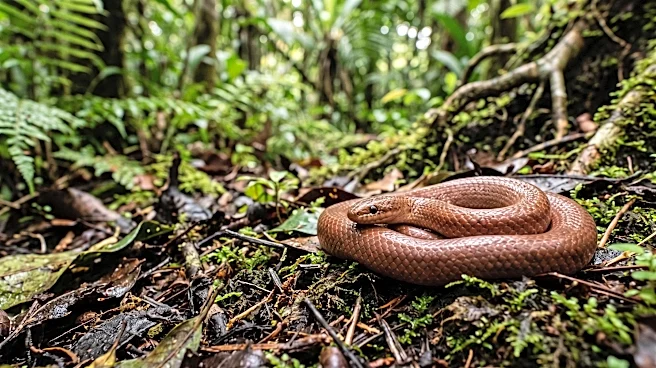
A newly discovered non-venomous snake species from New Guinea has been officially named Lielaphis slashi, or Slash’s groundsnake, in honor of Guns N’ Roses guitarist Saul Hudson, known as Slash. The Field Museum announced the species' description, noting
that the name was inspired by Slash's long-standing interest in snakes, reptiles, and natural history. The small, reddish-brown ground-dwelling snake, approximately 28 inches long, was first encountered during fieldwork in New Guinea in 2006 by Louisiana State University herpetologist Chris Austin. Researchers, including Tianqi Huang and Sara Ruane from the Field Museum, used genetic analyses, physical characteristics like scale counts, and ecological modeling to confirm it as a distinct, previously unknown species. Sara Ruane, an associate curator of herpetology at the Field Museum and senior author of the study, developed an interest in reptiles and Guns N' Roses during her childhood, further solidifying the connection.
Why It's Important?
The discovery and naming of Lielaphis slashi highlight the rich and often unexplored biodiversity of New Guinea, an island north of Australia. This formal documentation of new species is crucial for conservation efforts, as scientists cannot protect or study organisms they are unaware exist. The unique naming choice also brings broader public attention to scientific research and biodiversity, potentially engaging new audiences through the cultural relevance of a rock music icon. Furthermore, the process of identifying this new species underscores the rigorous scientific methods—combining genetic, morphological, and ecological evidence—required in taxonomy to differentiate new species from known ones. This scientific endeavor contributes to a more complete understanding of global ecosystems and the intricate web of life, particularly in regions facing environmental pressures from activities like coffee farming and mining.
What's Next?
Scientists plan to continue studying Lielaphis slashi to learn more about its behavior in the wild. Based on its anatomy, researchers hypothesize that New Guinea groundsnakes, with their relatively large teeth toward the back of their mouths, may prey on small, slippery-scaled lizards and reptile eggs, rather than using constriction like boas. Further research will aim to confirm these dietary habits and other ecological roles of the species. The ongoing pressures on New Guinea's forests from human activities like agriculture and resource extraction mean that continued biodiversity surveys and conservation initiatives will be critical to protect this newly identified species and its habitat. The attention generated by the snake's name may also encourage further funding and public interest in herpetological research and conservation in the region.
Beyond the Headlines
The naming of Lielaphis slashi after Slash bridges the seemingly disparate worlds of rock music and scientific discovery, illustrating how popular culture can intersect with and even promote scientific endeavors. This connection began with Sara Ruane's childhood inspiration from a Reptiles Magazine cover featuring Slash, demonstrating the long-term impact of early exposure to both science and cultural figures. The guitarist's own expressed interest in natural history and snakes made the tribute particularly fitting, adding a personal dimension to the scientific record. This event could serve as a model for future collaborations or inspirations, encouraging a broader appreciation for the natural world among diverse audiences. It also subtly underscores the ethical responsibility of documenting species before they are potentially lost due to habitat destruction, emphasizing that every new discovery contributes to the global biological inventory and informs conservation strategies.