







What's Happening?
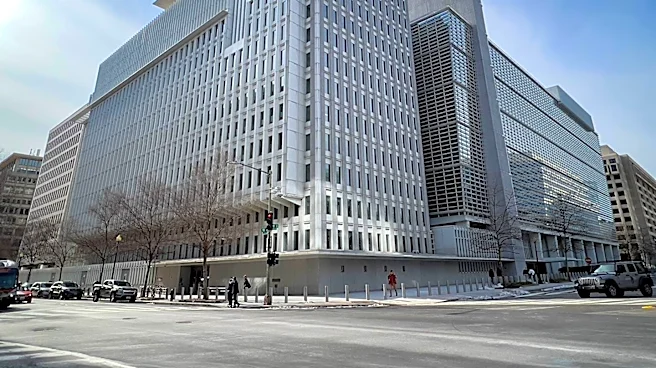
The World Bank has replaced its 45% climate finance target with a new outcomes-based framework. This change shifts the focus from the percentage of lending classified as climate finance to measuring success by development outcomes, such as emissions avoided
or people protected from climate risks. The decision has sparked debate over its implications for developing countries, which rely on predictable climate finance to plan long-term investments. Critics argue that the removal of a clear target reduces transparency and accountability.
Why It's Important?
The World Bank's decision marks a significant shift in how climate finance is managed and evaluated. By focusing on outcomes, the bank aims to integrate climate considerations across all its investments. However, this approach may lead to uncertainty in how climate finance is prioritized and allocated, potentially affecting the availability of concessional finance for developing countries. The change also reflects broader tensions among World Bank shareholders over the institution's role in climate finance.
What's Next?
The impact of the World Bank's new framework will become clearer over future lending cycles. Observers will be watching to see if other multilateral development banks adopt similar approaches. The shift towards outcomes-based evaluation may also influence how climate finance is reported and monitored globally. Developing countries and climate advocates will likely push for continued transparency and accountability in climate finance commitments.