


What's Happening?
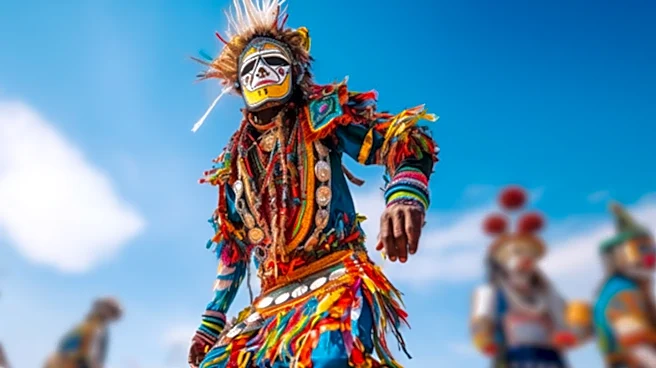
Shawn Reynolds, a member of the Puyallup Tribe, is actively working to make powwow dancing more accessible for individuals with disabilities and special needs. Inspired by his twin sons, Nakotah and Dakotah, who have autism, Reynolds noticed a lack of accommodations
in traditional powwows. He approached the directors of the South Sound Powwow, Rachel Barger and Grace Leatham, with a proposal to host a 'special' dance category where participants of all ages and abilities could join, utilizing any necessary accommodations. This initiative allows dancers to participate without the customary regalia, which can be overstimulating for some, and permits support persons to accompany them on the dance floor. The South Sound Powwow successfully implemented this inclusive special, with Reynolds' sons and other individuals with disabilities participating, some wearing noise-dampening headphones or dancing in street clothes.
Why It's Important?
This effort by Shawn Reynolds is significant for promoting inclusivity and cultural participation within Native American communities. By creating a dedicated space for individuals with disabilities in powwows, it addresses a long-standing gap in accessibility, ensuring that more people can engage with and celebrate their heritage. This initiative challenges traditional norms that often require specific regalia and adherence to competitive dance styles, which can be barriers for those with sensory sensitivities or physical limitations. The success of the South Sound Powwow's inclusive special demonstrates a model that can be replicated, fostering a more welcoming environment and strengthening community bonds. It highlights the importance of adapting cultural practices to meet diverse needs, thereby enriching the cultural experience for everyone involved and setting a precedent for other cultural events.
What's Next?
Shawn Reynolds plans to expand this initiative beyond the South Sound Powwow, aiming to encourage powwow organizers across the United States and Canada to incorporate similar inclusive specials or even full dance categories specifically for individuals with special needs and disabilities. His goal is to ensure that this practice becomes widespread, providing safe and welcoming spaces for participation in cultural events. This will involve continued outreach to powwow directors and communities, sharing the successful model implemented in Graham, Washington. The hope is that by demonstrating the positive impact of such accommodations, more powwows will adopt these inclusive practices, leading to a broader cultural shift towards greater accessibility and participation for all members of the community.
Beyond the Headlines
The movement to create inclusive powwow dancing spaces touches upon deeper societal implications regarding disability rights and cultural preservation. It underscores the idea that cultural traditions, while deeply rooted, can and should evolve to be more accommodating and representative of all community members. This initiative challenges the perception that disability is a barrier to cultural engagement, instead demonstrating how thoughtful adaptations can enrich and diversify cultural expressions. It also highlights the role of individual advocacy, particularly from parents like Shawn Reynolds, in driving meaningful change within their communities. The broader impact could extend to other cultural and community events, encouraging a re-evaluation of accessibility standards and fostering a more inclusive society where everyone has the opportunity to participate fully in cultural life.