






What's Happening?
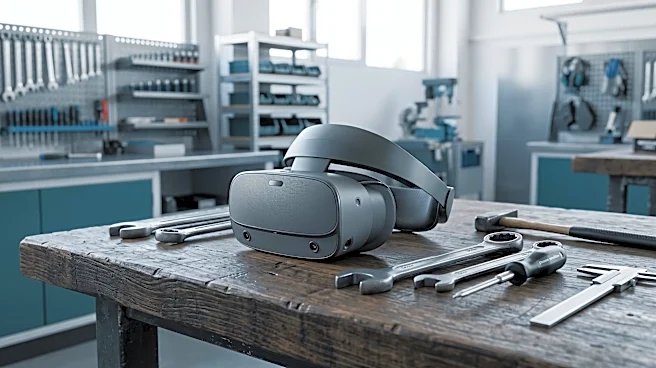
Be Pro Be Proud, in partnership with Milwaukee Tool, is expanding its virtual reality (VR)-powered skilled trades career exploration program for U.S. students. This collaboration integrates professional-grade equipment into Be Pro Be Proud's Mobile Workshops,
offering six VR career modules and student recognition programs. The initiative aims to make pathways in plumbing, HVAC, electrical work, carpentry, water technology, and diesel technology more tangible for young people. Groove Jones developed the immersive VR experiences, which place students in realistic work scenarios, such as repairing pipes or diagnosing diesel equipment. Students complete gamified tasks, receive feedback on speed and accuracy, and learn about skill levels, career opportunities, and potential earnings. Since 2016, Be Pro Be Proud has reached over 600,000 students nationally, and Milwaukee Tool plans to invest $200 million in U.S. skilled-trades workforce development by 2030.
Why It's Important?
This expansion is crucial for addressing the persistent skilled trades workforce shortage in the U.S. By leveraging immersive VR technology, the program offers a more engaging and realistic career exploration experience than traditional methods, helping to combat the stigma often associated with skilled trades. It allows students to visualize themselves in these roles, understand the practical applications of the skills, and see the direct connection to career opportunities and earning potential. This investment in workforce awareness and development is vital for building a stronger pipeline of skilled professionals, which is essential for maintaining infrastructure, powering industries, and supporting economic growth. The partnership between an educational initiative and a major tool manufacturer also highlights a collaborative approach to solving a national workforce challenge, demonstrating how technology and industry expertise can be combined to inspire the next generation.
What's Next?
The success and expansion of this VR-powered program suggest a growing trend in using immersive technology for career education and workforce development. Future initiatives may see more companies and educational organizations adopting similar VR and augmented reality (AR) tools to attract and train talent in various industries. The program's focus on making skilled trades 'tangible' indicates a shift towards hands-on, experiential learning that could become a standard in vocational training. Continued investment from industry leaders like Milwaukee Tool will be critical for scaling these programs and reaching a wider student population. The long-term goal is to significantly increase the number of young people pursuing skilled trades, thereby alleviating labor shortages and ensuring a robust workforce for essential sectors of the U.S. economy.
Beyond the Headlines
The use of VR in skilled trades career exploration represents a significant cultural and educational shift. It challenges the traditional perception that vocational training is less advanced or engaging than academic pursuits. By integrating cutting-edge technology, the program elevates the appeal of skilled trades, positioning them as modern, high-tech careers. This could lead to a broader re-evaluation of educational priorities, encouraging more students to consider diverse pathways beyond traditional four-year college degrees. Furthermore, the program's emphasis on practical skills and direct career outcomes provides a valuable model for addressing the disconnect between education and workforce needs. It also highlights the potential of technology to democratize access to career information and training, making it more accessible and appealing to a wider demographic of students, ultimately fostering a more skilled and adaptable national workforce.