




What's Happening?
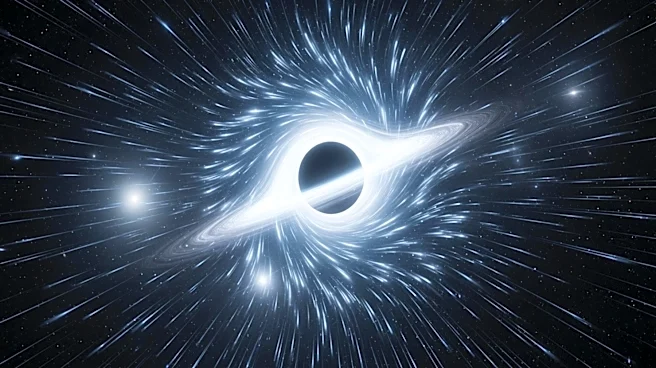
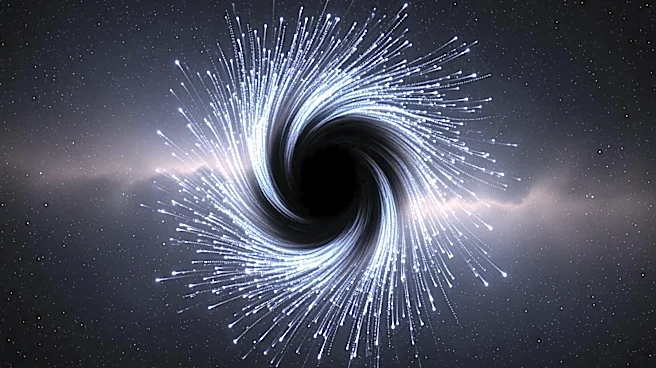
Astronomers have identified a quasar, J2318, powered by a supermassive black hole emitting winds at unprecedented speeds of 30% the speed of light, approximately 201 million miles per hour. This discovery marks the fastest black hole wind observed in ultraviolet
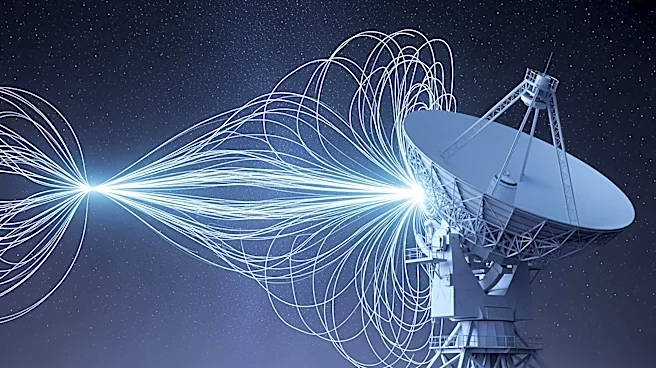
wavelengths. The quasar, located about 3 billion light-years away, has a mass 1.7 billion times that of the sun. These winds are driven by radiation, specifically photons, which push gas away from the black hole's accretion disk. The study utilized data from the Sloan Digital Sky Survey to analyze these high-speed winds, which are crucial for understanding the energy exchange between supermassive black holes and their host galaxies.
Why It's Important?
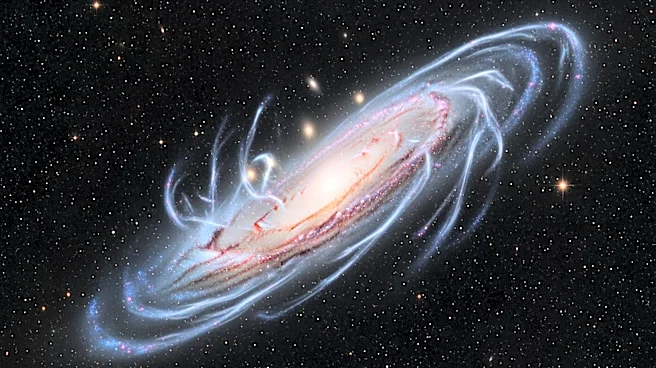
The discovery of such high-speed winds is significant for understanding galaxy evolution. These winds can influence the formation of stars by expelling gas and dust, which are essential for star birth. This process, known as feedback, is a critical component in galaxy formation models. The energy carried by these winds can affect the surrounding galaxy, potentially quenching star formation. Understanding these dynamics helps refine simulations of galaxy evolution and provides insights into the role of supermassive black holes in shaping their cosmic environments.
What's Next?
Astronomers plan to continue searching for similar high-speed black hole winds across the universe. The goal is to better understand the feedback mechanisms between black holes and their host galaxies. Future observations will focus on identifying other quasars with similar characteristics to J2318, which could provide further insights into the complex interactions within galaxies. This ongoing research is expected to enhance our understanding of the universe's structure and the role of black holes in cosmic evolution.