





What's Happening?
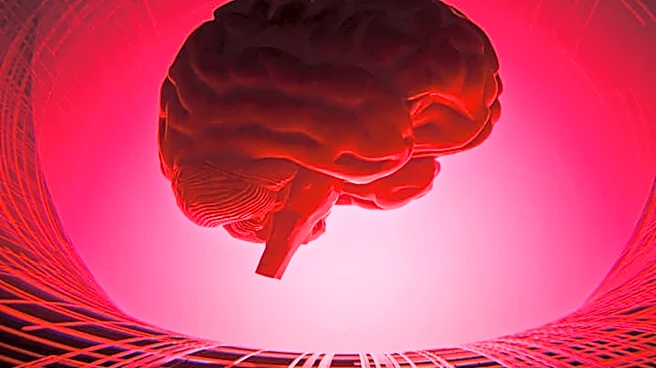
Research utilizing human brain organoids aboard the International Space Station (ISS) has directly contributed to a clinical trial for Rett syndrome, a severe neurological disorder affecting children. Scientists are now expanding this space-based approach
to investigate other brain diseases and accelerate the discovery of new treatments. Brain organoids, which are small, three-dimensional models grown from human stem cells, allow researchers to observe brain cell development, communication, and responses to disease and potential therapies. Neuroscientist Alysson Muotri at the University of California San Diego found that brain organoids in space exhibited molecular changes associated with aging and neurodegeneration more rapidly than those on Earth. Specifically, in organoids from children with Rett syndrome, dormant genetic elements activated, causing inflammation in brain support cells. This led to testing lamivudine, an antiretroviral HIV drug, to reduce inflammation, which is now in a clinical trial for Rett syndrome patients.
Why It's Important?
This development marks a significant milestone in medical research, demonstrating how space-based studies can directly translate into clinical applications on Earth. The unique microgravity environment of space appears to accelerate certain biological changes, providing a faster platform for understanding disease progression and testing potential treatments. This approach could drastically reduce the time and cost associated with drug discovery for complex neurological conditions. If lamivudine proves successful in clinical trials, it would be a pioneering example of a neurological drug discovered through space research. The expansion of this methodology to diseases like Parkinson's, multiple sclerosis, and Alzheimer's offers hope for millions affected by these debilitating conditions, potentially leading to more efficient and targeted therapies.
What's Next?
Future experiments will include models for Alzheimer's disease and aim for more efficient methods to study cells from multiple patients simultaneously, such as using 'village' organoids to compare responses across different genetic backgrounds. Scientists are continuing to investigate why biological changes manifest more quickly in space to optimize this research platform. The focus is shifting from merely understanding what space models can reveal to actively identifying and validating treatments faster. The ongoing clinical trial for Rett syndrome with lamivudine will be closely monitored, and its outcome will heavily influence the broader adoption and funding of space-based drug discovery initiatives for neurological disorders.
Beyond the Headlines
The use of the ISS as a medical research laboratory highlights the unexpected benefits of space exploration beyond astrophysics and engineering. This interdisciplinary approach, combining space science with neuroscience and pharmacology, represents a frontier in biomedical innovation. It also raises ethical considerations regarding the use of human stem cells and organoids in research, particularly in novel environments. The concept of 'accelerated aging' or 'disease progression' in microgravity could offer profound insights into the fundamental mechanisms of these conditions, potentially revealing universal triggers or pathways that are obscured in Earth-bound studies. This could lead to a re-evaluation of how we model and study complex human diseases, emphasizing the importance of diverse experimental conditions.