









What's Happening?
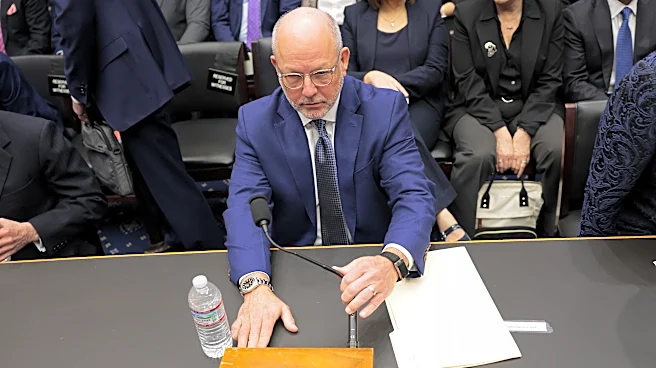
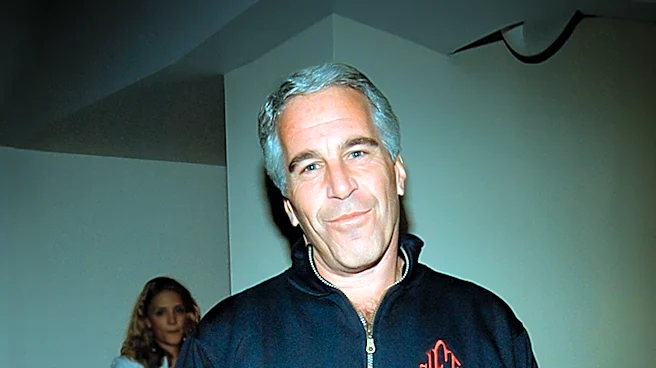
Lesley Groff, a longtime assistant to Jeffrey Epstein, was questioned by U.S. lawmakers regarding her role in arranging travel for women and girls using American Express services. The House Oversight Committee released a transcript of Groff's testimony,
which revealed that Epstein utilized Amex's Centurion travel service and a Black Card to book numerous travel itineraries, primarily for women from Eastern Europe. Groff, who worked for Epstein for nearly two decades, was a key figure in coordinating these bookings. During her testimony, Groff stated she was unaware of any travel arrangements made for girls under 18 and denied knowledge of any sexual activities associated with the travel. The committee also explored the possibility of 'decoy flights' being used to obtain visas, a claim Groff's attorney refuted.
Why It's Important?
The investigation into Epstein's network and the role of financial institutions like American Express highlights ongoing concerns about corporate responsibility and oversight in preventing exploitation and trafficking. The scrutiny of Groff's actions underscores the broader implications for companies that may inadvertently facilitate illegal activities through their services. This case raises questions about the adequacy of due diligence and monitoring practices within financial institutions, potentially prompting policy reviews and reforms to prevent similar abuses. The outcome of this investigation could influence how companies manage high-profile accounts and their compliance with legal and ethical standards.
What's Next?
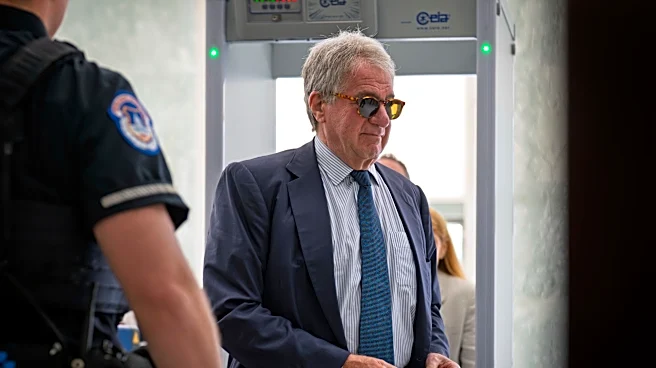
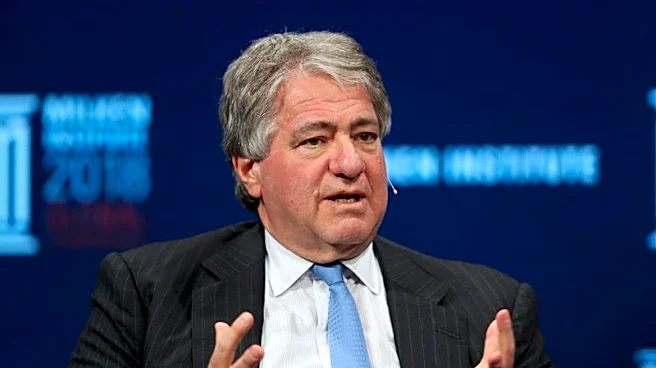
The House Oversight Committee may continue to investigate the extent of Epstein's network and the involvement of other individuals or institutions. Further testimonies, such as that of billionaire Leon Black, are expected, which could provide additional insights into the operations of Epstein's network. American Express and other financial institutions might face increased pressure to enhance their compliance measures and transparency. The findings could lead to legislative proposals aimed at strengthening regulations around financial transactions and preventing exploitation.