




What's Happening?
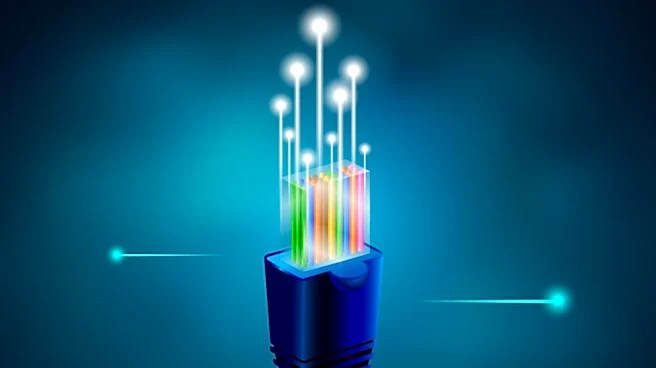
Mali’s La Société Malienne de Transmission et de Diffusion (SMTD-SA) and Sénégal Numérique (SENUM-SA) have officially commissioned a new fiber optic link, directly connecting their national fiber networks. This development, announced on Monday, provides
landlocked Mali with additional access routes to crucial subsea cable systems. These systems include those passing through Senegal and Cape Verde, such as the Senegal Horn of Africa Regional Express (SHARE) Cable, which links Dakar to Praia in Cape Verde. The SHARE Cable further interconnects with the EllaLink cable (Portugal to Brazil) and the West Africa Cable System (WACS) (Portugal to South Africa). Dakar also serves as a landing station for the 2Africa, ACE, and SAT-3 subsea cables. This interconnection is a direct outcome of an agreement reached during a regional workshop in April, aimed at developing a roadmap for the West African Network of National Backbones (ROA-BN/WANB) project.
Why It's Important?
This fiber optic interconnection is a significant step towards improving digital infrastructure and reducing communication costs across West Africa. For Mali, a landlocked nation, gaining additional access to subsea cable systems is crucial for enhancing internet connectivity, fostering economic development, and facilitating digital transformation. The broader ROA-BN/WANB project, which includes nine West African countries, aims to connect 80% of the collective population of these nations by 2033. Improved connectivity can stimulate various sectors, including education, healthcare, and business, by enabling faster and more reliable data transfer. This initiative can also attract foreign investment and support the growth of digital economies in the region, potentially leading to job creation and increased prosperity. The enhanced digital integration can also strengthen regional cooperation and trade among the participating countries.
What's Next?
The commissioning of this link marks a key milestone in the ongoing West African Network of National Backbones (ROA-BN/WANB) project. The next steps will likely involve the continued implementation of the roadmap to interconnect the national backbones of the remaining seven West African countries: Burkina Faso, Côte d’Ivoire, The Gambia, Ghana, Guinea, Niger, and Sierra Leone. Efforts will focus on expanding the reach of these networks to achieve the ambitious goal of connecting 80% of the collective population by 2033. This will entail further infrastructure development, potential partnerships with telecommunications providers, and regulatory harmonization across the participating nations to ensure seamless cross-border connectivity. The success of this project could serve as a model for similar regional digital integration initiatives across Africa.
Beyond the Headlines
Beyond the immediate benefits of improved internet access, this initiative has deeper implications for regional stability and socio-economic development in West Africa. Enhanced digital connectivity can empower citizens by providing access to information, online education, and digital financial services, thereby reducing digital divides. It can also foster greater transparency and governance by enabling more efficient communication and data sharing among government agencies. Furthermore, by strengthening regional infrastructure, the project can reduce reliance on external telecommunications providers and enhance the digital sovereignty of West African nations. The long-term impact could include the emergence of new digital industries, increased innovation, and a more integrated and resilient West African economy, contributing to overall regional stability and progress.