







What's Happening?
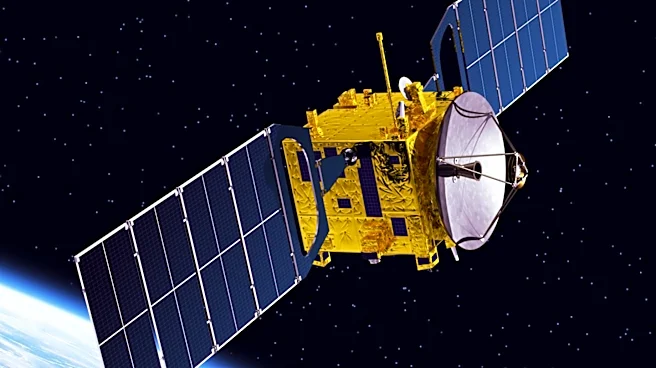
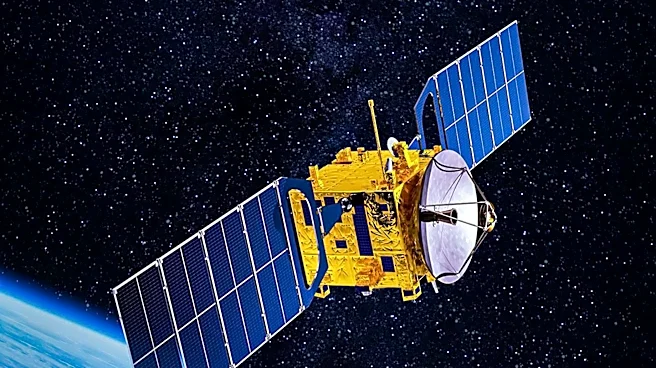
The Main Intelligence Directorate (GUR) of the Ukrainian Ministry of Defense has released information identifying 49 Russian and Belarusian companies involved in the development of the 'Rassvet' satellite system. This system is intended for both conventional
communications and military applications, including command and control of troops, drones, and strike systems. The GUR highlights that 23 of these companies and institutions are not currently subject to sanctions by the international sanctions coalition. The 'Rassvet' project is described as a low-Earth-orbit satellite system for broadband communications, comprising a network of satellites, ground control stations, and specialized equipment. Companies from various sectors, including IT, microelectronics, research, and the Russian space industry, are participating. The GUR specifically names Russian LLC 'Bureau 1440' as a key participant, responsible for much of the system's creation, and notes the involvement of the Russian state corporation 'Roscosmos' and the Russian Ministry of Defense. Financial support for the project has also been provided by the Russian bank VTB. The GUR assesses that the system is primarily intended for military use, including secure communications, troop command, and target designation for missiles, with a planned coverage area encompassing Ukraine and European Union countries.
Why It's Important?
The identification of companies involved in Russia's 'Rassvet' satellite project by Ukrainian intelligence carries significant implications for U.S. national security and foreign policy. The potential military application of this satellite system, including its use for controlling drones, missiles, and troop movements, poses a direct threat to U.S. allies and interests in Eastern Europe. The GUR's call for expanded sanctions against the 23 currently unsanctioned entities, including Roscosmos, could lead to increased pressure on the U.S. and its allies to broaden their sanctions regimes. This would impact U.S. businesses and industries that might have indirect dealings with these entities or their suppliers, requiring stricter compliance and due diligence. Furthermore, the project's aim to cover Ukraine and the European Union with its satellite network raises concerns about potential espionage, communication disruption, and enhanced Russian military capabilities in the region, directly affecting NATO's strategic posture. The involvement of various industries, from IT to microelectronics, underscores the dual-use nature of many technologies and the challenges in preventing their diversion for military purposes, prompting a re-evaluation of export controls and technology transfer policies by the U.S. and its partners.
What's Next?
Following the Main Intelligence Directorate's revelations, international partners, including the U.S., are expected to face increased pressure to tighten controls over the supply of components and technologies to the identified companies involved in the 'Rassvet' project. The GUR's explicit call for all involved companies to be subjected to sanctions, including a ban on cooperation and real consequences for violations, will likely prompt discussions among the sanctions coalition members. This could lead to an expansion of existing 'blacklists' to include the 23 previously unsanctioned entities, potentially impacting their access to global financial systems and technological supplies. The U.S. Department of the Treasury and Department of Commerce may initiate investigations into potential sanctions evasion or violations by U.S. or allied companies. Furthermore, the intelligence community will likely intensify monitoring of the 'Rassvet' project's development and deployment, given its assessed military implications for Ukraine and the European Union. The focus will be on restricting Russia's ability to acquire critical microelectronics, software, and specialized equipment necessary for the system's completion, potentially through enhanced export controls and diplomatic efforts.
Beyond the Headlines
The 'Rassvet' satellite project, as detailed by Ukrainian intelligence, highlights a critical and evolving dimension of modern warfare: the weaponization of space and dual-use technologies. Beyond the immediate military threat, this initiative underscores Russia's strategic ambition to achieve technological self-sufficiency in critical areas, circumventing international sanctions and reducing reliance on Western components. The involvement of a wide array of companies, from IT to financial institutions, reveals the deep integration of state and private sectors in Russia's defense industrial base. For the U.S., this development necessitates a re-evaluation of its own space-based defense strategies, counter-space capabilities, and the resilience of its satellite infrastructure against potential threats. It also raises ethical questions about the responsibility of technology companies whose products, even if initially designed for civilian use, can be repurposed for military aggression. The long-term implications include a potential acceleration of a new space race focused on military applications, increased cyber threats to satellite systems, and a more complex geopolitical landscape where control over orbital assets becomes a decisive factor in international power dynamics. This situation demands a holistic approach from the U.S., combining diplomatic pressure, economic sanctions, technological countermeasures, and robust intelligence gathering.