





What's Happening?
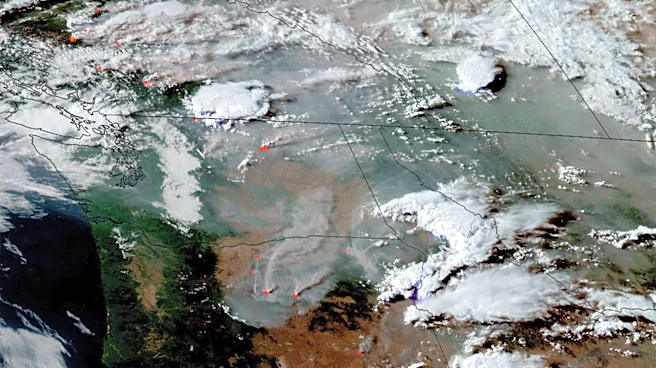
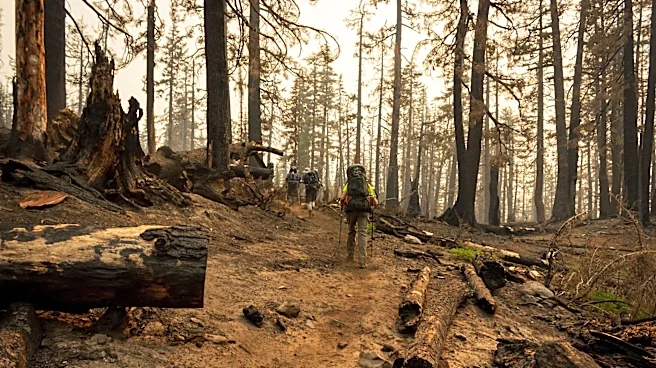
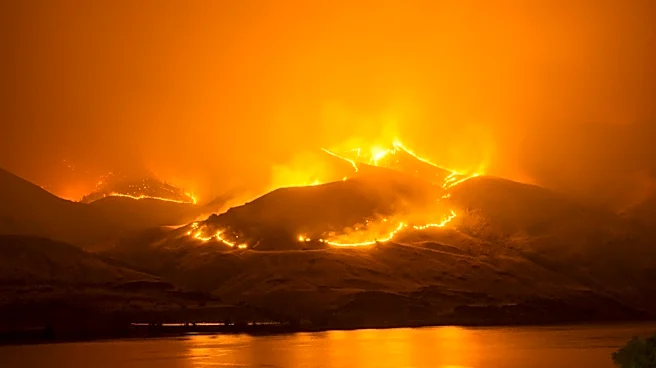
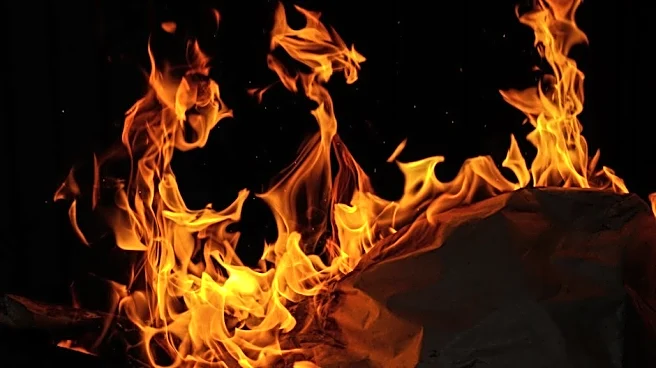
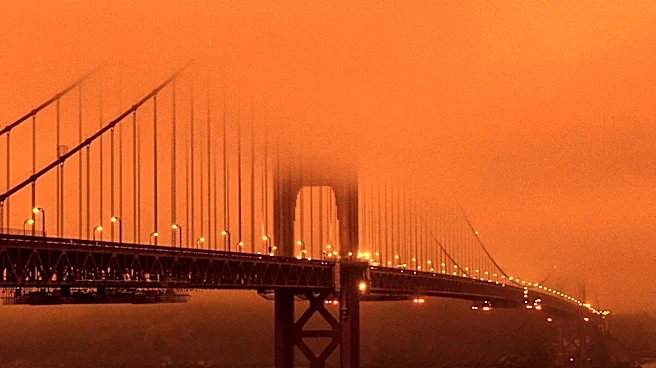
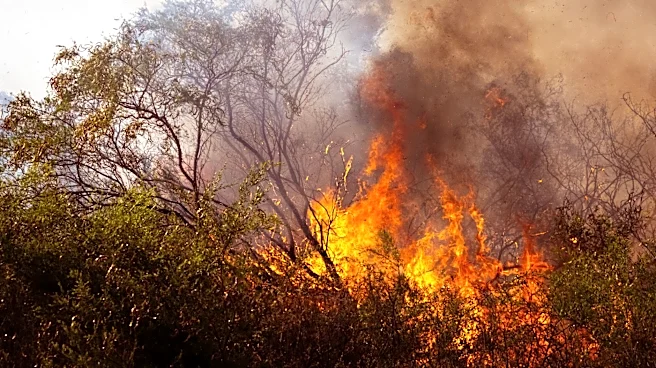
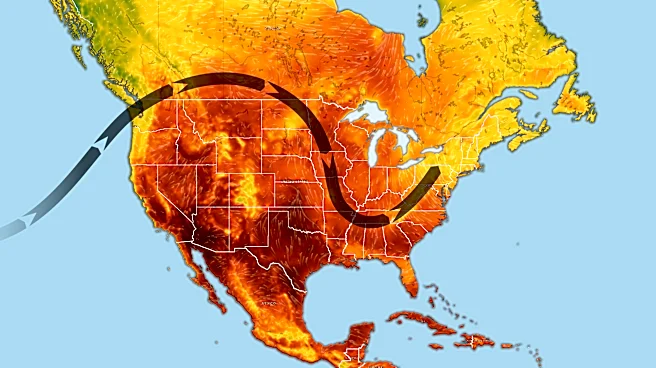
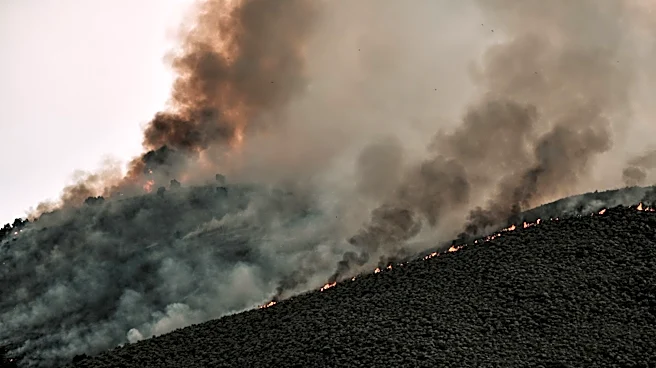
As of Wednesday morning, 45 large uncontained wildfires are burning in Oregon and Washington, collectively scorching over 1.8 million acres. These fires, along with others in British Columbia, have resulted in a massive plume of smoke spreading across
the United States, reaching as far as Florida. While air quality has slightly improved in Oregon and Idaho, both states continue to advise residents to minimize exposure to the smoke. The smoke is particularly hazardous due to fine particulate matter that can penetrate deep into the lungs, posing significant health risks, especially to sensitive groups such as those with pre-existing health conditions, older adults, and children.
Why It's Important?
The widespread smoke from these wildfires is causing significant health concerns across the U.S., highlighting the increasing frequency and intensity of wildfires due to climate change. The situation underscores the need for improved wildfire management and public health strategies to mitigate the impact of such events. The economic implications are also considerable, as prolonged poor air quality can affect outdoor activities, tourism, and local economies. The fires and resulting smoke serve as a stark reminder of the broader environmental challenges posed by global warming, necessitating urgent action to address climate change and its effects.
What's Next?
Authorities are closely monitoring the situation, with air quality advisories in place across affected regions. Efforts to contain the fires continue, but the unpredictable nature of wildfires, exacerbated by extreme weather conditions, poses ongoing challenges. The focus remains on protecting public health and safety, with recommendations for residents to stay indoors and use air filtration systems where possible. The situation may prompt further discussions on enhancing wildfire preparedness and response strategies at both state and national levels.