






What's Happening?
Ithaca Tompkins International Airport is slated to receive over $6.5 million in federal funding dedicated to the construction of a new snow removal equipment facility. This significant financial injection was announced by U.S. Senators Chuck Schumer and
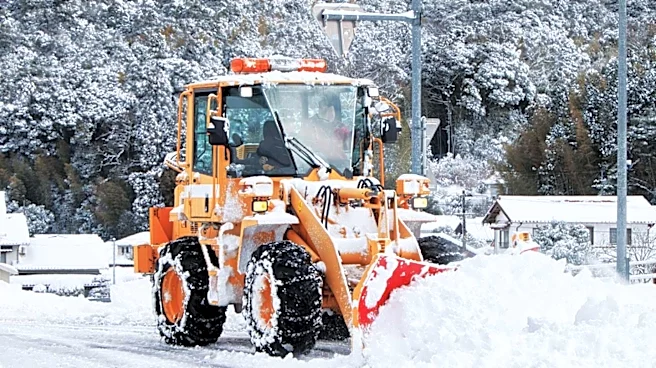
Kirsten Gillibrand, in conjunction with Congressman Josh Riley. The funds originate from the Federal Aviation Administration’s Airport Improvement Program, a critical initiative designed to enhance airport infrastructure nationwide. The project entails the development of a substantial 23,443-square-foot facility, which is specifically engineered to elevate the airport's snow removal capabilities to contemporary operational standards. This upgrade is crucial for ensuring the airport's ability to efficiently clear runways and maintain safe, uninterrupted air service throughout the challenging winter seasons. The federal allocation will specifically finance Phase Four of the construction, encompassing the foundational work, structural components, and the installation of essential heating, ventilation, and air conditioning systems. Senator Gillibrand, a ranking member of the Senate Appropriations Transportation Subcommittee, underscored the necessity for New York's airports, regardless of their size, to possess the resources required to guarantee a secure and pleasant travel experience for all passengers. Senator Schumer further noted that the funding was made possible through the Bipartisan Infrastructure Investment and Jobs Law, highlighting its role in bolstering critical airport infrastructure. Additionally, in fiscal year 2024, Senators Schumer and Gillibrand also secured an additional $1.5 million in federal funding for new emergency services facilities at the same airport, demonstrating ongoing commitment to its operational resilience.
Why It's Important?
This federal investment holds significant importance for regional connectivity and economic stability in Tompkins County, New York. Safe and reliable air service is a cornerstone for local economies, facilitating business travel, tourism, and access for students and residents. The upgrade to the snow removal capabilities directly addresses a critical operational challenge for airports in upstate New York, where severe winter weather can frequently disrupt flights and impact passenger safety. By ensuring that Ithaca Tompkins International Airport can operate efficiently year-round, the funding helps to safeguard the region's accessibility and its integration into national transportation networks. This project also exemplifies the tangible benefits of federal infrastructure legislation, such as the Bipartisan Infrastructure Investment and Jobs Law, in addressing specific local needs. For travelers, it means fewer delays and cancellations during winter, enhancing their overall experience and confidence in the airport's services. For the airport, it represents a modernization effort that improves operational resilience and safety standards, potentially attracting more airlines and routes in the future. The continued federal support, including the additional $1.5 million for emergency services facilities, underscores a broader commitment to maintaining robust and safe air travel infrastructure in the state.
What's Next?
The immediate next step for Ithaca Tompkins International Airport will involve the progression of Phase Four of the snow removal equipment facility project. With the federal funding now secured, the airport management and contractors can move forward with the detailed planning and execution of constructing the building's foundation, structural elements, and the installation of heating, ventilation, and air conditioning systems. This phase is crucial for laying the groundwork for the entire facility. The successful completion of this project is anticipated to significantly bolster the airport's operational resilience, particularly during the challenging winter months, by enabling more efficient and effective snow removal. This will, in turn, lead to a reduction in flight delays and cancellations, directly benefiting passengers and airlines. Local stakeholders, including the airport authority and Tompkins County officials, will likely monitor the construction progress closely to ensure adherence to safety standards, timelines, and budget allocations. The long-term outlook suggests that this modernization effort will contribute to the airport's capacity for growth and its ability to serve the region reliably. The precedent set by this and previous federal funding allocations, such as the $1.5 million for emergency services facilities in fiscal year 2024, indicates a sustained federal interest in supporting critical infrastructure upgrades at regional airports.
Beyond the Headlines
This federal investment in a regional airport's snow removal capabilities extends beyond a simple infrastructure upgrade, touching upon broader themes of national resilience and the strategic allocation of federal resources. It underscores a growing recognition that robust infrastructure, particularly in transportation, is vital for maintaining economic continuity and public safety in the face of increasingly unpredictable weather patterns. The Bipartisan Infrastructure Investment and Jobs Law, which served as the funding mechanism, exemplifies a national commitment to addressing long-standing infrastructure deficits across various sectors. This specific project at Ithaca Tompkins International Airport illustrates how large-scale federal legislation translates into tangible improvements at the local level, directly impacting the daily lives of residents, students, and businesses. It also highlights the critical, yet often overlooked, role of specialized equipment and facilities, like snow removal operations, in ensuring the functionality of essential services. The collaborative effort by U.S. Senators and a Congressman to secure these funds demonstrates the importance of cross-party and cross-chamber advocacy in channeling federal support to regional needs. This approach ensures that even smaller, regional hubs receive the necessary attention and investment to remain viable and safe components of the national transportation network, thereby contributing to overall economic stability and connectivity.