



What's Happening?
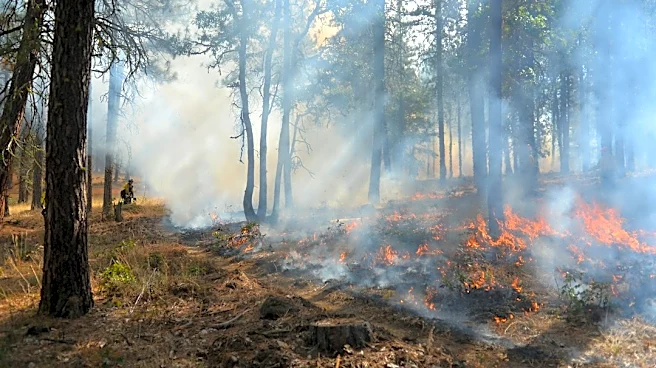
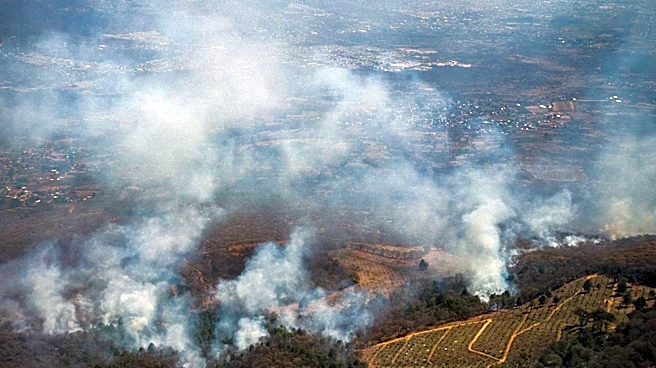
The Wild River Fire in New Hampshire has grown to approximately 1,000 acres and is currently only 11% contained. The U.S. Forest Service has deployed over 50 personnel and two helicopters to combat the blaze. The fire is actively spreading through steep
and rugged terrain, primarily fueled by dry leaf litter. Helicopters are being utilized to drop water in key areas that are difficult for ground crews to access. Officials have stated that maintaining both public and firefighter safety is the top priority. A closure order for the Wild River Fire vicinity is being prepared, and the public is advised to avoid the area to ensure clear access for emergency vehicles and fire operations. As of the latest report, there are no significant threats to life or property.
Why It's Important?
The expansion of the Wild River Fire to 1,000 acres, with minimal containment, highlights the significant challenges posed by wildfires in forested and rugged terrains. The involvement of over 50 personnel and two helicopters underscores the substantial resources required to manage such incidents, placing a strain on local and federal firefighting capabilities. The fire's spread through dry leaf litter emphasizes the impact of environmental conditions on wildfire behavior and the importance of fuel management. While there are currently no significant threats to life or property, the potential for rapid growth in uncontained areas always presents a risk to nearby communities, infrastructure, and natural resources. This event serves as a reminder of the ongoing need for robust wildfire preparedness and response mechanisms in regions susceptible to such blazes.
What's Next?
Firefighting efforts will continue with a focus on increasing containment of the Wild River Fire. The U.S. Forest Service and other agencies will likely deploy additional resources if necessary, depending on weather conditions and fire behavior. The impending closure order for the fire vicinity will aim to enhance safety for both the public and emergency responders by restricting access to the affected area. Monitoring weather patterns, particularly wind and humidity, will be critical for predicting the fire's trajectory and planning containment strategies. Public advisories will continue to be issued to keep residents informed and ensure their safety. The long-term outlook will involve assessing the ecological impact of the fire and planning for post-fire rehabilitation efforts.