





What's Happening?
Latvia's Defense Minister Raivis Melniks announced on November 9 that the National Armed Forces have revised their response procedures following an unsuccessful attempt to shoot down a drone that violated Latvian airspace last week. The incident involved
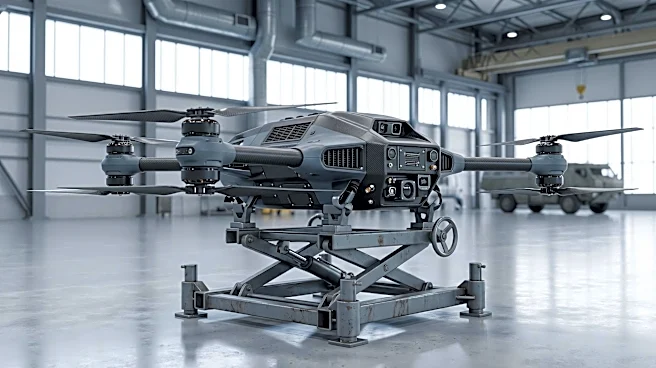
the detection of a drone by surveillance systems, followed by the deployment of an interceptor drone, which ultimately failed to destroy the target. Minister Melniks attributed the failure to existing coordination procedures and insufficient military experience with the new system. He apologized to residents for the inability to shoot down the drone but emphasized that key elements of the system, such as target detection and interceptor launch capability, were successfully tested. The primary change in the revised procedures is a reduction in the decision-making chain, which previously slowed military actions. Additionally, military personnel on the ground will be granted broader authority to act independently, while the command center will retain the ability to halt operations if allied aviation is present.
Why It's Important?
This incident and the subsequent procedural changes highlight the evolving challenges of airspace security, particularly in the context of drone technology. The failure to intercept a drone, even if non-hostile, exposes potential vulnerabilities in national defense systems and underscores the need for rapid response capabilities. The reduction in the decision-making chain is a critical step towards improving the effectiveness of drone interception, as delays can significantly diminish the chances of success. Granting more authority to ground-level military groups reflects an adaptation to the fast-paced nature of drone threats. This development is important for Latvia's national security and could serve as a case study for other nations facing similar airspace security challenges, particularly those in regions with heightened geopolitical tensions. The incident also emphasizes the ongoing learning curve associated with integrating new defense technologies and adapting operational protocols.
What's Next?
The National Armed Forces will implement the revised response procedures, focusing on faster decision-making and increased autonomy for ground units. Additional radar systems have been deployed along the eastern border to enhance early detection capabilities, providing more time for military response. The military will continue to master the use of the drone interception system, which was deployed in late September. Latvian entrepreneurs are also collaborating with the military to improve technical solutions. An internal investigation into the incident is ongoing to assess the circumstances and decisions made by officials. Separately, a criminal case has been initiated by the State Police regarding the discovery of presumed drone debris in the Alūksne region, which may be related to an earlier incident on October 18. These ongoing efforts aim to ensure more successful drone interceptions in the future and bolster Latvia's airspace defense.
Beyond the Headlines
The incident in Latvia underscores a broader trend in modern defense: the increasing prevalence of unmanned aerial systems (UAS) and the challenges they pose to traditional air defense strategies. The need to balance rapid response with coordination, especially when allied forces are involved, highlights the complexities of integrated air defense systems. The minister's acknowledgment of insufficient experience with the new system points to the continuous training and adaptation required for military personnel to effectively operate advanced technologies. This situation also raises questions about the origin and intent of such drones, even if not explicitly hostile, as they can be used for reconnaissance or as precursors to more significant threats. The focus on domestic innovation and collaboration with local entrepreneurs for technical improvements suggests a strategic shift towards self-reliance and rapid technological adaptation in defense, a model that could be adopted by other nations facing similar threats.