



What's Happening?
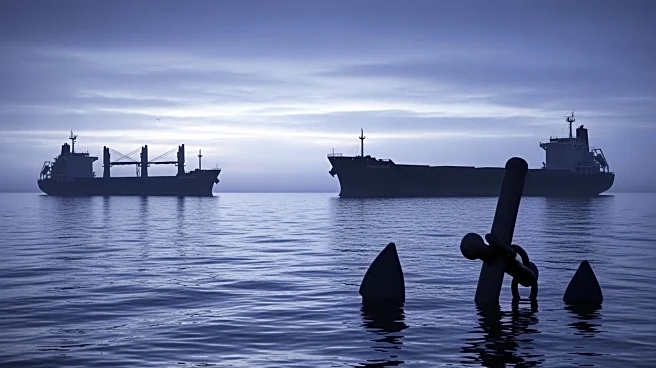
The United States has seized a second vessel in international waters near Venezuela, following President Trump's announcement of a blockade on all sanctioned oil tankers entering or leaving the country. The operation, led by the U.S. Coast Guard with
support from the Department of War, involved helicopters surrounding the vessel. This action is part of a broader enforcement campaign against the illicit movement of sanctioned oil, which is believed to fund narco-terrorism in the region. The Venezuelan government has condemned the seizure, labeling it as 'theft and kidnapping,' and has vowed to take the matter to the United Nations Security Council and other international bodies.
Why It's Important?
This development underscores the escalating tensions between the United States and Venezuela, particularly concerning the latter's oil exports. The U.S. blockade aims to cut off financial resources to the Venezuelan government, which the Trump administration accuses of supporting terrorism through oil smuggling networks. This action could further strain diplomatic relations and impact global oil markets, as Venezuela is a significant oil producer. The U.S. military's increased presence in Latin America also highlights the strategic importance of the region in U.S. foreign policy, potentially affecting regional stability and international trade routes.
What's Next?
Venezuela has indicated its intention to challenge the U.S. actions at the United Nations and other international forums, which could lead to diplomatic confrontations. The U.S. is likely to continue its enforcement actions against sanctioned vessels, potentially leading to further seizures. This ongoing campaign may provoke responses from other countries with vested interests in Venezuelan oil, possibly leading to broader geopolitical implications. The situation remains fluid, with potential for increased military and diplomatic activity in the region.