

What's Happening?
The Department of Homeland Security (DHS) shutdown has reached its 39th day, severely impacting Transportation Security Administration (TSA) employees who are missing paychecks. Over 400 TSA employees have left the agency, and many more are calling out
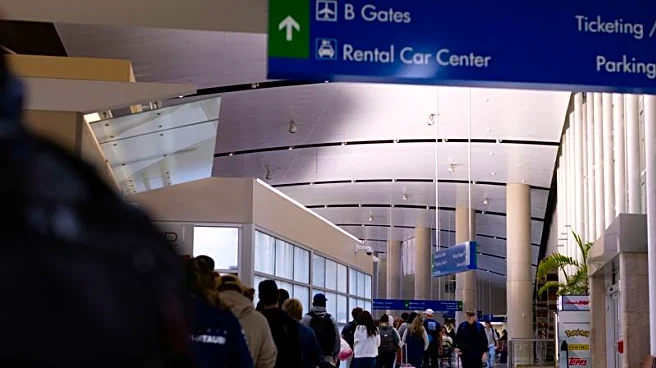
of work, leading to long security lines at airports. The Trump administration has deployed Immigration and Customs Enforcement (ICE) officers to assist TSA, but union representatives argue this measure is insufficient. TSA employees, many of whom live paycheck to paycheck, are facing financial hardships, with some resorting to selling plasma to make ends meet. The ongoing shutdown has left TSA employees at a 'breaking point,' with concerns about further attrition and recruitment challenges.
Why It's Important?
The prolonged shutdown highlights the vulnerability of federal employees who rely on regular paychecks, underscoring the broader implications of government funding lapses. The situation at TSA reflects the strain on essential services and the potential risks to national security and public safety. The deployment of ICE officers, while intended to alleviate staffing shortages, has been criticized as a temporary and inadequate solution. The financial instability faced by TSA employees could lead to increased turnover and difficulty in attracting new hires, potentially compromising airport security operations. The shutdown also raises questions about the sustainability of current government funding mechanisms and the need for legislative reforms to protect federal workers during such crises.
What's Next?
As the shutdown continues, pressure is mounting on lawmakers to reach a funding agreement that would restore paychecks for TSA and other DHS employees. Union leaders are advocating for the passage of the Shutdown Fairness Act, which would ensure federal workers are paid during shutdowns. The situation may prompt discussions on broader reforms to prevent future shutdowns and address the financial security of federal employees. In the meantime, TSA and other affected agencies will need to manage workforce morale and retention challenges, while ensuring the continuity of critical operations.