





What's Happening?
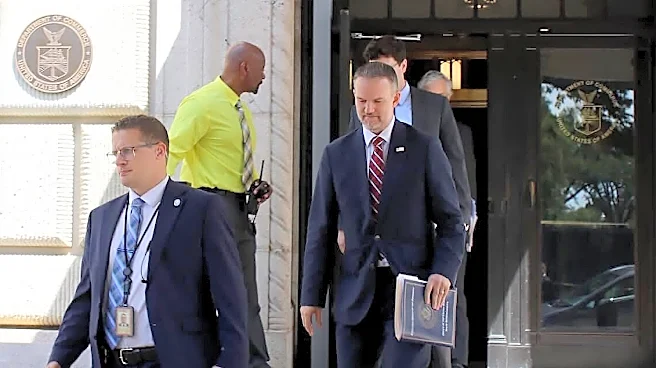
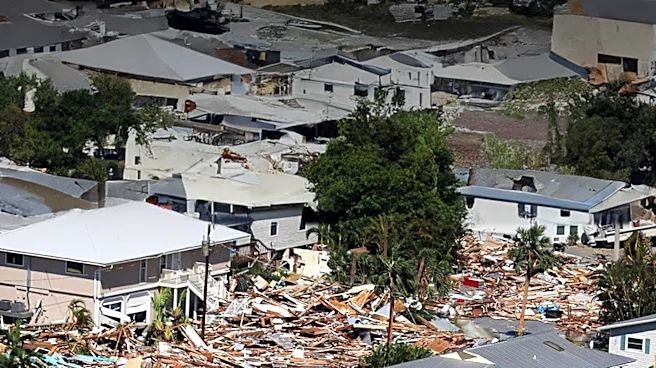
Treasury Secretary Scott Bessent has announced Asheville, North Carolina, as the host city for the G20 Finance Ministers and Central Bank Governors Ministerial meetings. This decision, made in February, is intended to highlight the Trump Administration's
commitment to the revitalization of western North Carolina following Tropical Storm Helene in late September 2024, and to showcase the success of President Trump’s economic policies. The G20 meetings, scheduled for August 29-September 1, will bring together finance ministers and central bank governors from the world's 20 largest economies, along with representatives from the European Union and African Union. While administration officials claim accelerated aid to the region, state and local officials, courts, and advocacy groups contend that the federal response has fallen short of promises. North Carolina Governor Josh Stein, along with Republican Senators Ted Budd and Thom Tillis, have expressed frustration over the amount of federal aid and the need for appeals and lawsuits to secure approved funds. The federal aid provided to North Carolina for Helene recovery totals $7.8 billion as of March 31, 2026, significantly less than the $25.6 billion requested by Governor Cooper.
Why It's Important?
The selection of Asheville for the G20 summit carries significant implications for both national and international perceptions of U.S. economic policy and disaster recovery efforts. Domestically, it aims to project an image of successful economic policies and effective federal disaster response, particularly in a region still grappling with the aftermath of a major natural disaster. However, the ongoing dispute over federal aid levels and the pace of recovery highlights a disconnect between the administration's narrative and the experiences of local communities. This situation could influence public opinion regarding the effectiveness of federal disaster management and the administration's economic policies, especially as the country approaches the November midterms. Internationally, the summit provides a platform for the U.S. to set the agenda for global economic policy, focusing on areas like modernized financial regulation, global economic imbalances, sovereign debt transparency, digital asset growth, and cross-border payment systems. The choice of Asheville also serves as a symbolic gesture, intended to demonstrate the resilience of a region recovering from disaster, though local leaders emphasize that significant federal investment is still needed.
What's Next?
The G20 Finance Ministers and Central Bank Governors Ministerial meetings will proceed in Asheville from August 29 to September 1, with deputies handling technical groundwork before the main ministerial session. These meetings are part of a larger 2026 circuit for the Finance Track, which will culminate in a leaders' summit in December at Trump National Doral in Miami. The discussions in Asheville are expected to focus on key international economic issues, potentially leading to a joint statement or communiqué. Concurrently, the debate over federal aid for Hurricane Helene recovery is likely to continue, with Governor Stein's request for an additional $10 billion still pending in Congress. Legal challenges regarding grant conditions, such as those related to the Building Resilient Infrastructure and Communities (BRIC) program and Homeland Security grants, are also ongoing. The outcome of these financial and legal disputes will significantly impact the pace and completeness of western North Carolina's recovery and could set precedents for future federal-state disaster response relationships during President Trump's second term.
Beyond the Headlines
The decision to host the G20 summit in Asheville, a city still recovering from Tropical Storm Helene, reveals deeper tensions between federal narratives of success and local realities of ongoing struggle. While the administration seeks to showcase its economic policies and disaster response, the persistent shortfall in federal aid and the legal battles over funding expose a contentious federal-state relationship. This situation raises questions about the equitable distribution of federal resources following disasters and the political motivations behind such allocations. The inclusion of Diversity, Equity, and Inclusion (DEI) language in Asheville's recovery plan, which initially led to a block in federal funds, highlights ideological clashes that can impede critical recovery efforts. Furthermore, the administration's efforts to dismantle agencies like FEMA and NOAA, as attempted by the Department of Government Efficiency (DOGE), underscore a broader philosophical debate about the role and scope of federal government in disaster management and public services. The 'K-shaped' economic recovery, where wealthier Americans benefit disproportionately while lower-income households face higher prices, also suggests a widening economic disparity that could be exacerbated by uneven disaster recovery. The G20 summit, therefore, becomes a stage where these complex domestic issues intersect with global economic discussions, offering a nuanced view of the U.S.'s internal challenges.