








What's Happening?
Deer droppings, commonly found in U.S. residential areas and gardens, present potential health hazards and agricultural concerns. Deer feces can carry harmful germs such as E. coli O157:H7 and Salmonella, which can cause illness in humans, particularly
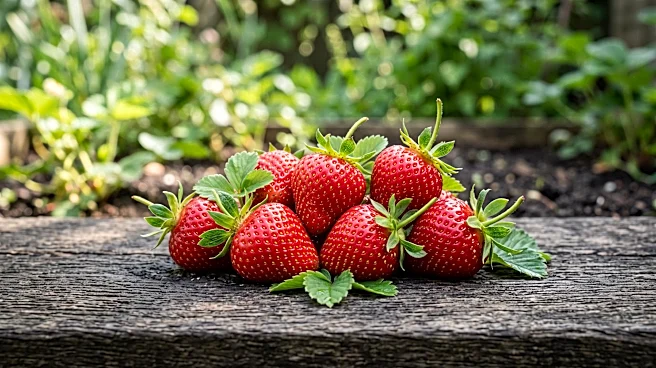
young children, the elderly, and individuals with weakened immune systems. A notable incident in 2011 involved an E. coli O157:H7 outbreak in Oregon, traced to strawberries contaminated with deer feces, resulting in hospitalizations and two fatalities. Additionally, deer droppings are implicated in the spread of Chronic Wasting Disease (CWD) among deer, elk, and moose, as prions can be shed through feces and persist in the environment. While CWD infections in humans have not been reported, the potential for environmental contamination remains a concern. The presence of deer droppings also impacts gardening practices, as raw manure from deer can contaminate produce, necessitating specific guidelines for harvesting and cleaning to ensure food safety.
Why It's Important?
The widespread presence of deer in suburban and rural U.S. landscapes makes understanding the implications of their droppings crucial for public health and agricultural practices. The risk of E. coli and Salmonella contamination from deer feces directly impacts food safety, particularly for home gardeners and small-scale farmers. The 2011 Oregon outbreak serves as a stark reminder of the severe consequences that can arise from such contamination, highlighting the need for vigilance in areas where deer interact with food production. Furthermore, the role of deer droppings in the environmental transmission of CWD poses a significant challenge for wildlife management and disease control efforts. While human infection with CWD is currently unconfirmed, the persistence of prions in soil raises long-term ecological and health questions. For homeowners, managing deer presence and their waste is essential for maintaining safe outdoor spaces, especially for children and pets, and for protecting garden produce from contamination.
What's Next?
To mitigate the risks associated with deer droppings, public health advisories and agricultural guidelines will likely continue to emphasize safe handling practices. This includes recommendations for wearing gloves when cleaning up deer feces, thoroughly washing hands, and implementing measures to deter deer from residential properties and gardens. For produce, the FDA's guidelines for identifying and avoiding contaminated crops, along with proper washing techniques, will remain critical. Research into the environmental persistence and transmission of CWD prions through deer feces may lead to updated wildlife management strategies and public health recommendations. Homeowners may increasingly consider fencing and other deterrents to prevent deer from entering their yards, thereby reducing the potential for contamination and disease transmission. Educational campaigns could also play a role in informing the public about the risks and preventative measures related to deer droppings.
Beyond the Headlines
Beyond the immediate health and agricultural concerns, the issue of deer droppings underscores broader ecological and societal challenges. The increasing interface between wildlife and human habitats, driven by suburban expansion and changing land use, intensifies the potential for zoonotic disease transmission and environmental contamination. This situation highlights the complex balance between wildlife conservation and public health protection. The persistence of CWD prions in the environment, facilitated by deer feces, presents a long-term ecological puzzle, potentially impacting soil health and other wildlife species. Ethically, it raises questions about human responsibility in managing wildlife populations and their impact on shared environments. Culturally, it may influence perceptions of wildlife in residential areas, shifting from appreciation to a more cautious approach due to health risks. The need for integrated approaches that combine public health, wildlife biology, and agricultural science will be paramount in addressing these multifaceted implications.