




What's Happening?
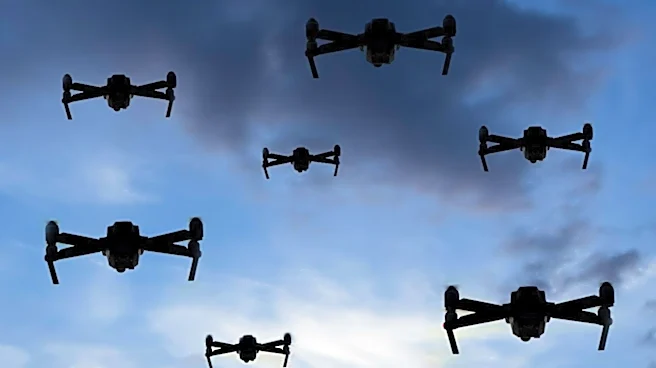
Yemeni government forces are increasingly deploying remotely operated drones to target Houthi fighters, marking a significant development in the decadelong conflict. This escalation follows Houthi attacks using one-way assault drones, which resulted in casualties
among government soldiers. The government's military units have released video footage showcasing drones tracking targets, dropping bombs, and damaging Houthi positions and vehicles. Experts note that while the Houthis have historically possessed more sophisticated drone capabilities, the government's acquisition of this tactical capability could be crucial for day-to-day battles along static front lines. The government's Ministry of Defence recently unveiled its drone arsenal, though specific details about the types and capabilities of these drones remain undisclosed. This increased drone activity by government forces is occurring across multiple fronts, including Marib, al-Jawf, Taiz, Hajjah, and al-Dhalea.
Why It's Important?
The increased use of drones by Yemeni government forces represents a potential shift in the balance of power within the ongoing conflict. For years, the Iran-backed Houthis maintained a significant advantage in drone warfare, utilizing their advanced systems for surveillance and strategic strikes. The government's newfound ability to deploy its own drones, even if not yet matching the Houthis' strategic range, introduces a new dynamic to the battlefield. This development could challenge the Houthis' long-held dominance in asymmetric warfare and potentially impact their morale, as their movements and positions become more vulnerable to aerial surveillance and attack. The adoption of drone technology by the government also highlights a broader trend of 'Ukraine-isation' in tactical drone warfare, where inexpensive UAVs are becoming a more common and accessible tool for smaller units, rather than a specialized capability. This could lead to more costly front lines for the Houthis and restrict their operational flexibility.
What's Next?
The Yemeni government's sustained drone campaign is expected to continue, with the potential to further impact Houthi movements and positions. Military experts suggest that if the current intensity and coordination of government drone operations are maintained, they could improve the tactical balance on the ground. The government's recent restructuring of its military, establishing a single decision-making center, indicates a continued commitment to military action against the Houthis. This could lead to more coordinated and effective drone strikes. The increased volume of footage released by government-aligned forces showcasing drone attacks aims to project military dominance and undermine Houthi morale, suggesting a psychological warfare component to this new strategy. While a definitive win against the Houthis is not guaranteed, the ongoing drone campaign is likely to make the conflict more challenging and costly for the Houthi forces.
Beyond the Headlines
The evolving drone warfare in Yemen underscores the global proliferation and increasing accessibility of unmanned aerial vehicle technology in modern conflicts. The Houthis' long-standing reliance on Iranian technological assistance for their sophisticated drone capabilities highlights the role of external actors in shaping regional conflicts. The Yemeni government's adaptation of commercial drones for military operations, as noted by researchers, points to a broader trend where readily available technology is being repurposed for combat, blurring the lines between civilian and military applications. This 'Ukraine-isation' of tactical drone warfare, where drones become an ordinary weapon for small units, raises ethical and legal questions regarding accountability and the potential for increased civilian casualties. The psychological impact of constant aerial surveillance and attack on combatants, as well as the broader population, is also a significant, though less obvious, implication of this technological shift in warfare.