






What's Happening?
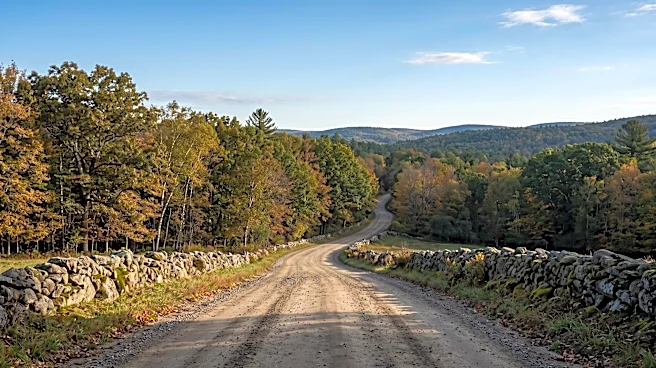
In 1704, Sarah Kemble Knight, a 38-year-old widow, schoolmistress, and businesswoman, undertook an extraordinary horseback journey from Boston to New Haven and then to New York along the Boston Post Road. Her detailed journal, though not published until
1825, provides a rare and vivid account of travel in early 18th-century New England. Knight's journey, which began on October 2, 1704, was remarkable given that women typically did not travel unescorted over such distances during that era. Her writings describe the challenging road conditions, primitive inns, and the diverse people she encountered, offering insights into colonial life, customs, and the social landscape of the time. She documented everything from negotiating prices with tavernkeepers to observing local customs in Connecticut and the urban environment of New York.
Why It's Important?
Madame Knight's journal is an invaluable historical document, offering a unique first-person perspective on colonial American life and travel. Her observations provide critical insights into the social norms, economic practices, and geographical challenges of the early 18th century. The journal highlights the resilience and independence of women like Knight, who defied societal expectations by undertaking such a perilous journey. It also sheds light on the nascent infrastructure of the Boston Post Road, illustrating the difficulties of inter-colonial travel before modern transportation. Historians and researchers gain a deeper understanding of daily life, regional differences, and the interactions between various communities, including English settlers, Native Americans, and enslaved people, through her detailed and often humorous accounts. This primary source material enriches our knowledge of American history beyond official records.
What's Next?
While Madame Knight's journey concluded in 1705 and her journal was published posthumously, its continued study and interpretation remain relevant. Historians will likely continue to analyze her writings for new insights into colonial American society, gender roles, and economic practices. Educational institutions may incorporate her journal into curricula to provide students with a direct connection to early American experiences. The journal's themes of resilience, observation, and cultural commentary ensure its enduring legacy as a significant piece of American literature and historical record. Further research might explore the broader context of women's roles in business and travel during the colonial period, using Knight's experiences as a foundational case study.
Beyond the Headlines
Madame Knight's journey and journal offer a profound look into the cultural and ethical dimensions of colonial America. Her observations on the manners and customs of different regions, including her surprise at Connecticut farmers allowing enslaved people to dine with them, reveal the prevailing prejudices and social hierarchies of the time. The journal also subtly critiques the legal and social systems, such as the strictness of Connecticut laws regarding youthful behavior. Her personal narrative transcends a mere travelogue, becoming a commentary on identity, class, and the evolving American character. The fact that her journal was not published for over a century after her trip underscores the historical underrepresentation of women's voices and experiences, making its eventual publication a significant moment for historical scholarship and the recognition of diverse perspectives in American history.