









What's Happening?
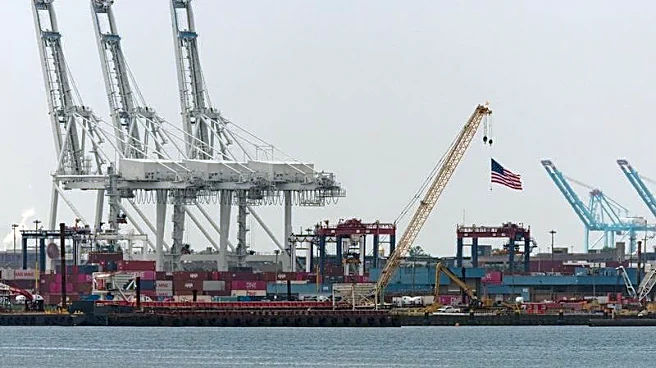
The U.S. trade deficit, which measures the difference between imports and exports, saw a slight decrease in September but remains at high levels, challenging the Trump administration's goal of shrinking it. The deficit dropped to $105 billion in September,
a 0.7% decrease from August, yet it marks the second-largest monthly total since President Trump imposed global tariffs in April 2025. This persistent deficit is partly attributed to companies importing significant shipments of expensive artificial intelligence chips and computers for new data centers. In September, imports increased by 1.2% to a record $426.6 billion, driven by purchases of computers and pharmaceuticals. Exports also rose by 1.9% to $321.5 billion, boosted by computer, crude oil, and aircraft exports, alongside large orders of American soybeans from Chinese firms.
Why It's Important?
The elevated trade deficit is a significant concern for the Trump administration, which views it as an indicator of weakness in the American manufacturing sector. President Trump's strategy of imposing tariffs on many American imports aimed to reduce this deficit. However, some economists question the effectiveness of this approach, citing high consumer and government spending. The administration has largely exempted high-value goods like pharmaceuticals and AI chips from tariffs, while imposing them on everyday consumer products such as furniture, toys, and clothing. This selective application of tariffs has made trade more volatile, with businesses rushing to import goods before tariffs take effect, leading to surges and subsequent drops in the trade deficit. The cost of these tariffs is also being felt by consumers, with economists noting that price increases on certain products, particularly those found in stores like Walmart, are partly due to these tariffs.
What's Next?
The Trump administration has indicated plans to impose additional tariffs on foreign products in the coming months, even as existing tariffs face legal challenges. The potential impact of recent political shifts, such as a Democratic sweep, on these tariff plans remains uncertain. During recent campaigns, voters expressed concerns about the rising cost of living, with some attributing it to tariffs. However, economist Brad Setser from the Council on Foreign Relations suggests that while tariffs contribute to price increases, the primary drivers of cost-of-living concerns are the high prices of gas, housing, and medical care. The ongoing debate over tariffs and their economic impact is likely to continue, influencing future trade policies and consumer spending.
Beyond the Headlines
The strategic exemption of high-tech goods like AI chips and pharmaceuticals from tariffs, while consumer goods face duties, highlights a nuanced approach to trade policy. This suggests a prioritization of technological advancement and healthcare accessibility over the protection of certain domestic manufacturing sectors for everyday items. The volatility introduced into trade by these tariffs also creates an unpredictable environment for businesses, potentially leading to supply chain disruptions and inventory management challenges. The long-term implications could include a shift in global manufacturing locations and sourcing strategies as companies adapt to fluctuating tariff landscapes. Furthermore, the public perception of tariffs as a contributor to the cost of living could influence future electoral outcomes and public support for protectionist trade policies.