



What's Happening?
On January 6, 1998, NASA launched the Lunar Prospector as part of its Discovery Program, which focuses on cost-effective solar system investigations. The mission aimed to map the lunar surface composition, search for polar water ice, and analyze the Moon's
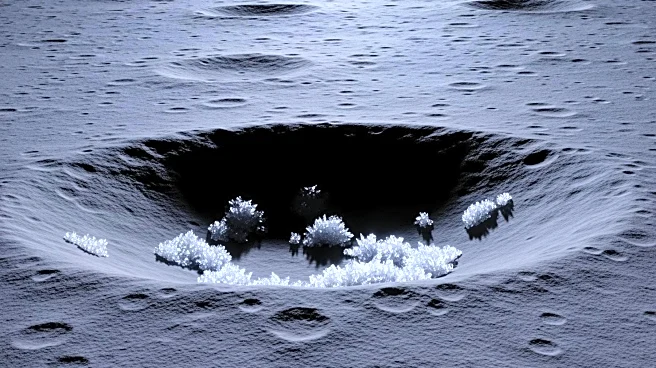
magnetic and gravitational fields. The spacecraft, which was relatively small and inexpensive at approximately $65 million, continuously transmitted data back to Earth. The mission provided the first evidence of water ice at the Moon's poles and created a global map of lunar rock types. The mission concluded in July 1999 when the spacecraft was deliberately crashed into Shoemaker Crater, although the anticipated plume of water vapor was not observed.
Why It's Important?
The Lunar Prospector mission was significant for several reasons. It provided the first direct evidence of water ice on the Moon, which has implications for future lunar exploration and potential colonization. Water ice could be used as a resource for sustaining human life and producing fuel for further space exploration. The mission also demonstrated the effectiveness of NASA's Discovery Program in conducting cost-effective and scientifically valuable missions. By mapping the Moon's surface and analyzing its magnetic and gravitational fields, the mission contributed to a better understanding of the Moon's geology and history, which is crucial for planning future missions.
What's Next?
The findings from the Lunar Prospector mission have paved the way for future lunar exploration missions. NASA and other space agencies are likely to continue exploring the Moon, focusing on areas with confirmed water ice deposits. These missions could involve more detailed studies of the lunar poles and the development of technologies to extract and utilize lunar resources. The success of the Discovery Program's cost-effective approach may also influence the planning and execution of future space missions, encouraging more frequent and diverse explorations of the solar system.
Beyond the Headlines
The discovery of water ice on the Moon has broader implications beyond immediate scientific and exploration goals. It raises questions about the Moon's history and the processes that led to the presence of water ice. Additionally, the mission's success highlights the potential for international collaboration in space exploration, as the Moon's resources could become a focal point for cooperative efforts among nations. The ethical and legal aspects of utilizing extraterrestrial resources will also need to be addressed as space exploration advances.