


What's Happening?
A draft report in California proposes reducing the conversion of agricultural land in the Sacramento-San Joaquin Delta for natural habitat and flood control purposes. The report, released in September, follows a 17-year-old mandate for state officials
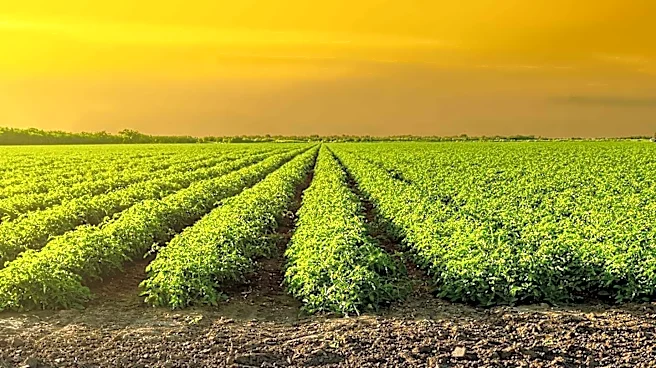
to establish a more reliable water supply and restore wildlife habitats in the Delta. Amanda Bohl, executive director of the Delta Protection Commission, stated that the report aims to re-center agriculture in the conversation, aligning with the state's policy of co-equal goals for water supply reliability and ecosystem health. While the report suggests reducing the amount of land previously planned for conversion, it does not specify the potential costs to taxpayers or which agencies would bear these expenses. It also recommends methods to enhance the agricultural and economic viability of farms in the Delta, alongside strategies to decrease carbon emissions and subsidence.
Why It's Important?
This draft report is significant for California's agricultural sector and environmental policy, particularly in the Sacramento-San Joaquin Delta, a critical region for both farming and ecosystem health. The recommendation to preserve more agricultural land directly impacts farmers and local economies dependent on these operations. It highlights a tension between agricultural productivity and environmental conservation efforts, seeking a balance between water supply reliability, habitat restoration, and the economic viability of farming. The report's focus on offsetting losses in reclamation district assessments and local tax revenues indicates an awareness of the financial implications for property owners and local governments. The outcome of this report will influence land use policies, water management strategies, and the economic future of the Delta region, affecting various stakeholders from farmers to environmental groups and taxpayers.
What's Next?
The draft report will likely undergo further review and public comment before finalization. Key stakeholders, including agricultural communities, environmental organizations, and local government bodies, will have the opportunity to provide feedback on its recommendations. A crucial next step will be to address the unspecified costs associated with the proposed changes and to identify the taxpayer-funded agencies responsible for these expenses. The report's recommendations for increasing agricultural viability and decreasing carbon emissions and subsidence will require detailed implementation plans and potential legislative action. The ultimate goal is to achieve a balanced approach that supports both the agricultural economy and the ecological health of the Sacramento-San Joaquin Delta, while ensuring a reliable water supply for the state.
Beyond the Headlines
The debate over land use in the Sacramento-San Joaquin Delta reflects a broader national challenge of balancing economic development, food security, and environmental protection. This report highlights the complex interplay between agricultural interests, water resource management, and ecosystem preservation in a region vital to California's economy and biodiversity. The lack of specified costs in the draft report points to a common issue in policy-making, where the long-term financial implications of environmental and land-use decisions are often deferred or remain unclear. This situation can lead to future budgetary challenges and potential conflicts among different interest groups. The report's emphasis on re-centering agriculture in the conversation suggests a growing recognition of the need for integrated approaches that consider the socio-economic dimensions alongside ecological goals, moving towards more holistic and sustainable land management practices.