
What's Happening?
American universities in the Middle East are taking precautionary measures following threats from the Islamic Revolutionary Guard Corps (IRGC) of Iran. This development comes after the U.S. and Israel
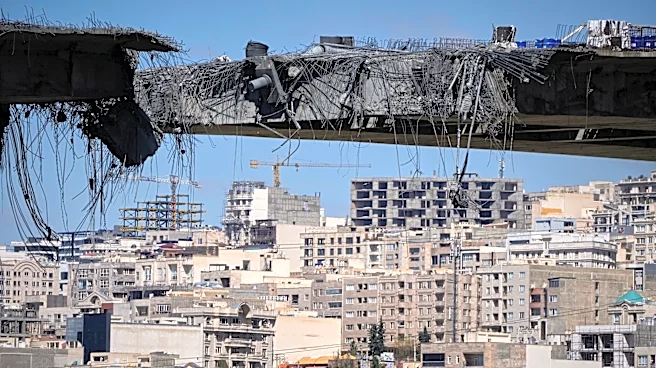
launched strikes on Iranian universities, prompting Iran to declare American educational institutions in the region as 'legitimate targets.' In response, the American University of Beirut has restricted campus access to essential personnel only, while Education City in Doha, Qatar, which hosts campuses of Georgetown, Cornell, and Northwestern, has closed its premises. Similarly, New York University’s Abu Dhabi campus has also shut down temporarily. These institutions have shifted to remote or hybrid learning models to ensure the safety of students and staff. The situation is further complicated by the ongoing conflict between Israel and Hezbollah, which has displaced over a million people in Lebanon, many of whom are seeking refuge near the American University of Beirut.
Why It's Important?
The threats against American universities in the Middle East highlight the escalating tensions in the region and the potential risks to international educational institutions. These universities have historically played a significant role in fostering educational and cultural exchanges between the U.S. and the Middle East. The current situation could deter foreign students and faculty from engaging with these institutions, impacting their operations and international collaborations. Additionally, the threats underscore the broader geopolitical instability in the region, which could have long-term implications for U.S. foreign policy and its educational outreach efforts. The closure of these campuses also affects the local communities that rely on them for educational and economic opportunities.
What's Next?
The immediate future for American universities in the Middle East involves maintaining heightened security measures and continuing remote learning. The U.S. Embassy in Beirut has advised American citizens to leave the country, indicating the seriousness of the threat. Universities will need to assess the situation continuously and make decisions about reopening based on security assessments. The broader geopolitical context suggests that tensions may persist, potentially leading to further disruptions. Institutions may also need to consider long-term strategies for operating in volatile regions, including diversifying their locations or enhancing security protocols.