







What's Happening?
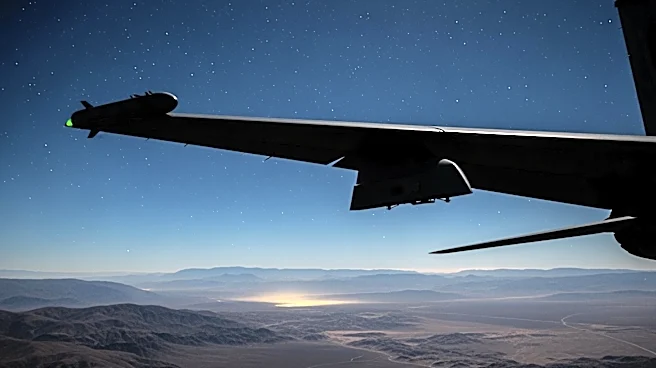
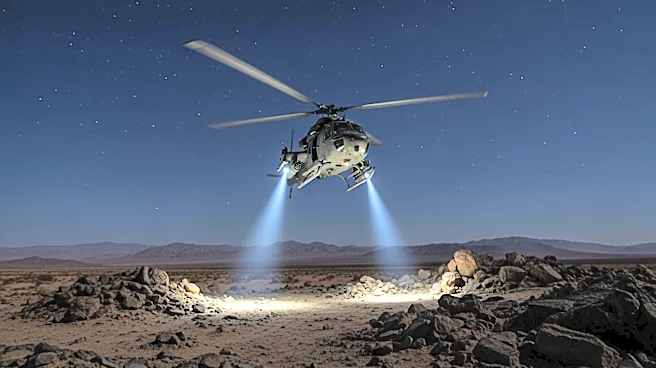
The Central Intelligence Agency (CIA) has utilized a new technology called 'Ghost Murmur' in a high-stakes operation to rescue a U.S. airman from Iran. This technology can detect human heartbeats over long distances and employs artificial intelligence
to filter out background noise. The operation involved hundreds of U.S. military personnel and aimed to retrieve an injured U.S. weapons systems officer after his F-15E Strike Eagle fighter jet was downed by a missile in Iran. The rescue took place amidst ongoing U.S.-Israeli strikes on Iran, marking the first time a U.S. jet was downed over Iran since the conflict began. The CIA's director, John Ratcliffe, described the operation as akin to finding a grain of sand in a desert, highlighting the challenges faced in locating the airman who was hiding in a remote area of southern Iran.
Why It's Important?
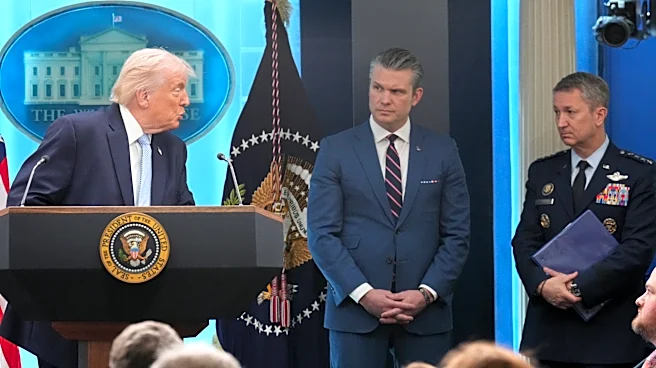
The deployment of 'Ghost Murmur' technology signifies a significant advancement in military rescue operations, potentially enhancing the U.S. military's ability to locate and retrieve personnel in hostile environments. This operation underscores the ongoing tensions between the U.S. and Iran, with President Trump announcing a ceasefire shortly after the rescue. The use of advanced technology in military operations could shift the dynamics of international conflicts, providing the U.S. with a strategic advantage. The successful rescue operation also highlights the importance of technological innovation in ensuring the safety and recovery of military personnel, which could influence future military strategies and policies.
What's Next?
The ceasefire announced by President Trump is set to last for two weeks, with talks between the U.S. and Iran scheduled to take place in Pakistan. The fragile nature of the truce raises questions about its sustainability and the potential for renewed hostilities. The use of 'Ghost Murmur' technology may lead to further developments in military rescue operations, potentially prompting other nations to invest in similar technologies. The geopolitical implications of the ceasefire and the rescue operation could influence diplomatic relations and military strategies in the region.
Beyond the Headlines
The operation highlights ethical considerations surrounding the use of advanced surveillance technologies in military operations. The ability to detect human heartbeats raises privacy concerns and questions about the potential misuse of such technology. Additionally, the geopolitical tensions between the U.S. and Iran could have long-term implications for regional stability and international relations, particularly concerning the Strait of Hormuz, a critical shipping lane.