

What's Happening?
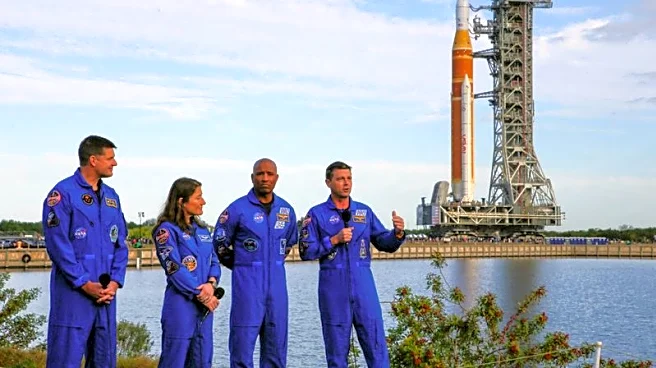
NASA is in the final stages of preparation for the Artemis II mission, which is set to launch as early as April 1, 2026. The mission will utilize the Space Launch System (SLS) rocket and Orion spacecraft to carry a crew of four astronauts, including Commander
Reid Wiseman, Pilot Victor Glover, and Mission Specialist Christina Koch from NASA, along with Mission Specialist Jeremy Hansen from the Canadian Space Agency. The mission aims to take the crew around the Moon and back to Earth. Current weather forecasts indicate an 80% chance of favorable conditions for the launch, with primary concerns being cloud coverage and high winds.
Why It's Important?
The Artemis II mission is a critical step in NASA's efforts to return humans to the Moon and eventually establish a sustainable presence there. This mission will test the capabilities of the SLS rocket and Orion spacecraft, paving the way for future lunar exploration. Success in this mission could bolster international collaboration in space exploration, as it includes participation from the Canadian Space Agency. Additionally, the mission's success could inspire public interest and support for NASA's long-term goals, including the Artemis program's aim to land the first woman and next man on the Moon.
What's Next?
Following the launch, NASA will closely monitor the mission's progress as the crew travels around the Moon. The mission's success will be evaluated based on the performance of the SLS rocket and Orion spacecraft, as well as the crew's ability to conduct operations in lunar orbit. Future missions will build on the data and experience gained from Artemis II, with the ultimate goal of establishing a sustainable human presence on the Moon. NASA will continue to engage with international partners and the public to share updates and insights from the mission.