




What's Happening?
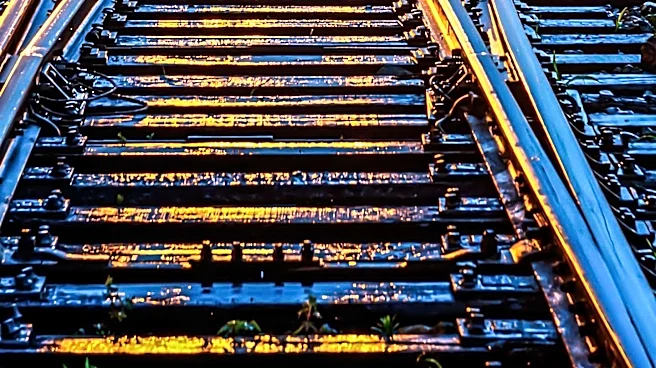
Many common phrases in American English have their origins in railroad terminology, according to Mike Reeves, Board Chairman of the Saluda Depot Museum. Phrases like 'fast track,' 'derailed,' 'making the grade,' 'got sidetracked,' 'on the wrong track,' 'staying
on track,' 'bells and whistles,' 'tunnel vision,' and 'chugging along' all stem from the early days of railroading. Reeves highlights 'blow off steam' as a particularly vivid example, explaining its origin from the pressure release valves on steam engines. Another term, 'deadbeat,' is traced back to the sound empty freight cars made over track joints, indicating they weren't carrying a load or 'paying their way.' The Saluda Depot Museum, open from April to December, offers visitors the chance to learn more about railroad lingo and history.
Why It's Important?
The integration of railroad jargon into everyday language reflects the profound historical impact of the railroad industry on American society and culture. During its peak, railroading was a dominant force in transportation, commerce, and employment, shaping the lives of countless Americans. The adoption of its specialized vocabulary into common speech demonstrates how a powerful industry can influence linguistic evolution and cultural understanding. This linguistic legacy provides a tangible link to a significant era of American industrial development, reminding us of the ingenuity and challenges faced by those who built and operated the nation's rail networks. Understanding these origins enriches our appreciation of the English language and the historical context embedded within it.
What's Next?
The Saluda Depot Museum continues to preserve and share the history of railroading, including its unique language. Visitors can explore this heritage and engage with docents to learn more about railroad lingo. The museum, which relies on fundraising and donations, serves as a cultural touchstone, ensuring that the stories and terminology of this vital American industry are not forgotten. Efforts to maintain and promote such historical sites contribute to public education and cultural preservation, allowing future generations to connect with the nation's industrial past and its lasting influence on contemporary language and society.
Beyond the Headlines
The phenomenon of specialized jargon migrating into general vocabulary speaks to the broader process of cultural diffusion and the way technological advancements can reshape communication. It highlights how language is a living entity, constantly evolving to incorporate new experiences and innovations. The adoption of railroad terms suggests a collective societal understanding and internalization of the industry's mechanics and challenges. This linguistic legacy also subtly influences our perception of efficiency, progress, and failure, as these terms carry their original connotations into new contexts. It underscores the idea that the tools and industries we create not only serve practical purposes but also leave an indelible mark on our shared cultural and linguistic landscape.