
What's Happening?
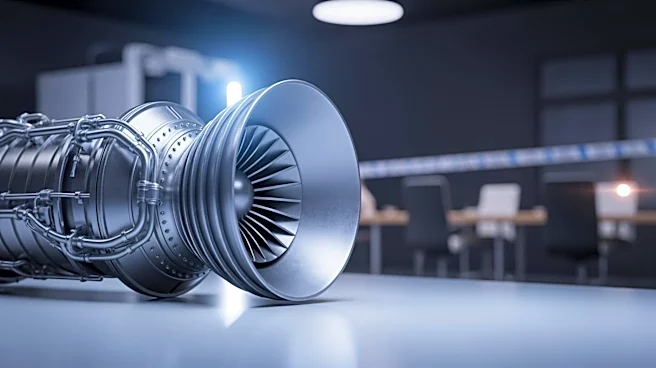
Astrobotic Technology has successfully conducted a hotfire test of its Chakram engine prototype, a rotating detonation rocket engine (RDRE), at NASA's Marshall Space Flight Center in Huntsville, Alabama.
The engine achieved a continuous burn of 300 seconds, demonstrating its potential for cislunar and logistics missions. The RDRE design aims to enhance efficiency by up to 15% and reduce engine size, utilizing supersonic detonation waves. Although not yet space-proven, the terrestrial test was completed on a budget of less than $1.5 million. Astrobotic plans to incorporate this technology into future missions, including its Griffin lander, which is set to attempt a lunar landing this year.
Why It's Important?
The successful test of the Chakram engine represents a significant advancement in rocket technology, potentially reducing costs and increasing payload capacity for lunar missions. This development aligns with NASA's goals under the Artemis program to establish a sustainable human presence on the Moon. Astrobotic's progress also underscores the growing role of private companies in space exploration, contributing to technological innovation and expanding commercial opportunities in space. The engine's efficiency and cost-effectiveness could make it a valuable asset for future missions beyond Earth's orbit.
What's Next?
Astrobotic plans to integrate the RDRE technology into its Griffin lander and other spacecraft, such as the Xodiac and Xogdar reusable rockets. The company is preparing for its Griffin Mission-1, which will carry various payloads to the Moon, including a rover and sensor systems. While the Chakram engine does not yet have a scheduled flight date, its successful testing paves the way for future applications in space missions. Continued collaboration with NASA and further testing will be crucial in advancing this technology for operational use.