




What's Happening?
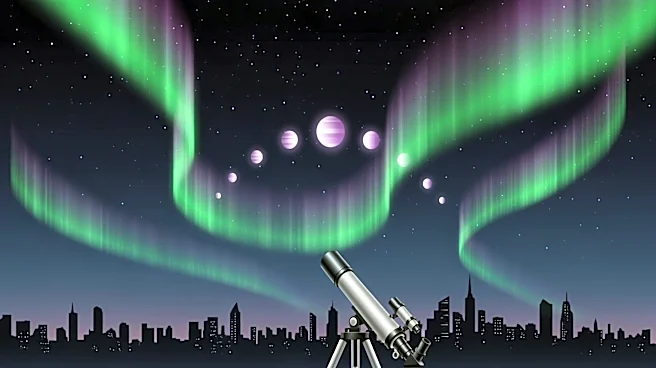
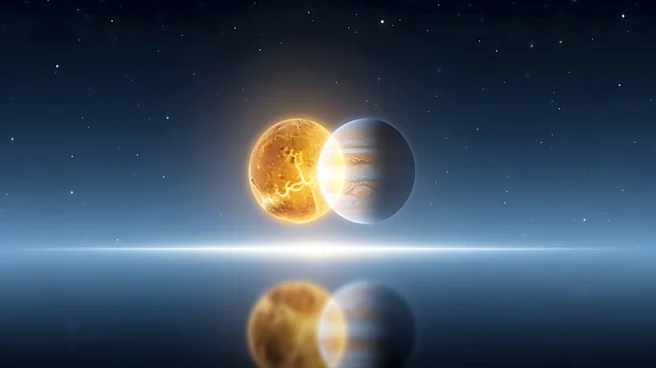
A celestial event featuring the conjunction of Venus and Jupiter is set to captivate skywatchers in June 2026. The two brightest planets in the night sky will appear exceptionally close to each other, creating a striking visual spectacle. This conjunction will be
visible in the western sky during twilight, with the best viewing time being from 45 minutes to two hours after sunset on June 9. The planets will appear just 1.6 degrees apart, a proximity that allows them to fit within the field of view of standard binoculars. Despite their apparent closeness, this is an optical illusion, as Venus is much closer to Earth than Jupiter. Venus will shine brightly as the 'Evening Star' throughout the summer, while Jupiter will gradually recede from view.
Why It's Important?
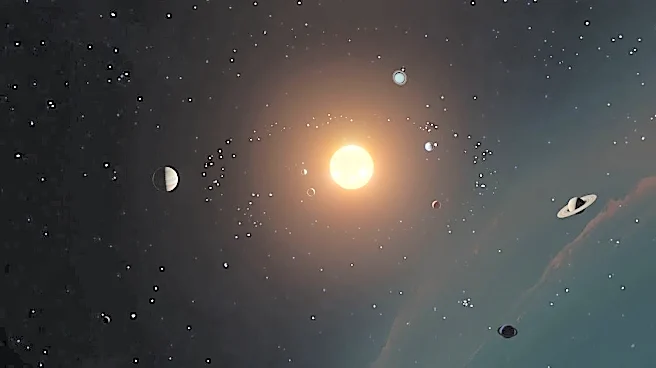
The conjunction of Venus and Jupiter is a significant event for both amateur and professional astronomers, offering a rare opportunity to observe two major planets in close proximity. Such events can enhance public interest in astronomy and encourage educational activities related to space science. The visibility of the conjunction to the naked eye makes it accessible to a wide audience, fostering a shared experience of wonder and curiosity about the universe. Additionally, the event highlights the dynamic nature of our solar system and the intricate movements of celestial bodies, providing a practical demonstration of astronomical concepts.
What's Next?
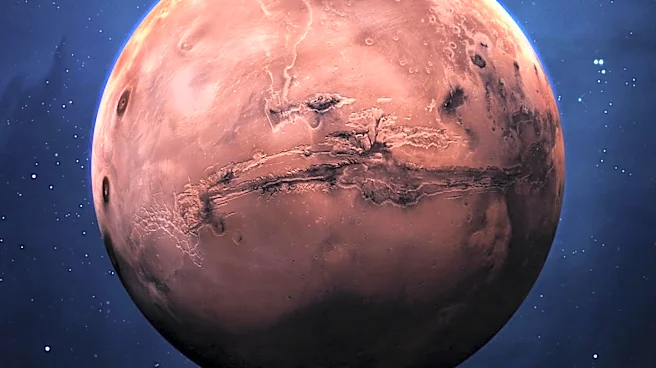
Following the conjunction, Venus will continue to be visible as the 'Evening Star' throughout the summer, reaching its farthest distance from the sunset in mid-August. Jupiter, on the other hand, will be lost in the sun's glare by late July. The next major planetary conjunction will occur on November 15, 2026, when Jupiter and Mars will appear close together in the pre-dawn sky. These ongoing celestial events offer continued opportunities for skywatching and engagement with astronomy.