






What's Happening?
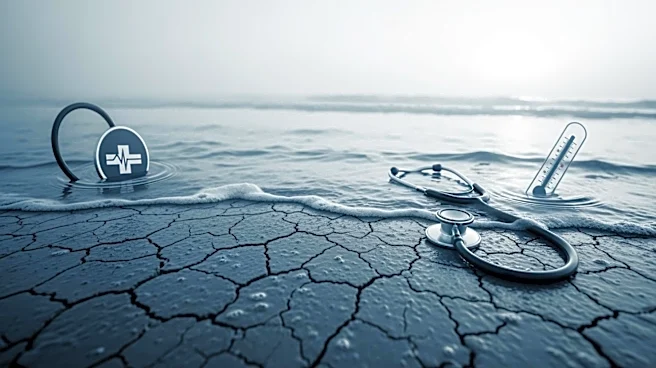
Sea-level rise is increasingly being recognized as a present-day health crisis, with significant impacts on communities worldwide. The intrusion of saltwater into freshwater supplies, overwhelmed sanitation systems, and inundated farmland are contributing
to health and nutritional challenges. The Lancet Commission on Sea-Level Rise, Health and Justice has been established to address these issues, emphasizing the interconnectedness of health, justice, and climate impacts. The commission aims to provide rigorous research to inform policy and action, highlighting the disproportionate effects on vulnerable populations who have contributed least to the problem.
Why It's Important?
The recognition of sea-level rise as a health crisis underscores the urgent need for comprehensive strategies to address its impacts. Vulnerable communities, particularly in low-lying coastal regions and small island states, face significant risks to their health, livelihoods, and cultural heritage. The situation calls for accountability from polluters and a shift towards sustainable practices to mitigate further damage. The establishment of the Lancet Commission represents a critical step in bringing together expertise to tackle these challenges and advocate for justice and equity in climate action.
Beyond the Headlines
The broader implications of sea-level rise extend beyond immediate health impacts, touching on issues of justice, equity, and cultural preservation. Indigenous communities, whose identities and traditions are closely tied to their land, face existential threats as their environments change. The situation highlights the need for inclusive and culturally sensitive approaches to climate adaptation. Additionally, the legal and policy frameworks surrounding climate accountability are evolving, with international bodies increasingly recognizing the rights of affected communities and the responsibilities of states to protect them.