








What's Happening?
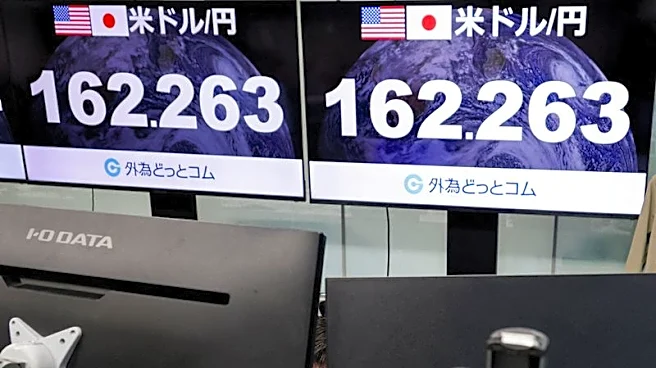
Japan's Ministry of Finance has confirmed a joint intervention with the United States in the currency market, purchasing yen to address recent excessive volatility and disorderly movements. This marks the first such coordinated action since 2011, following
the Great East Japan Earthquake. The intervention aims to stabilize the yen, which has experienced significant fluctuations in recent months. President Trump has acknowledged the U.S.'s involvement in supporting the yen, emphasizing the importance of demonstrating bilateral friendship and aiding the global economy.
Why It's Important?
The joint intervention by Japan and the U.S. is a critical move to stabilize the yen, which has been under pressure due to various economic factors, including rising oil prices and fiscal deficits. This action reflects the strategic importance of maintaining currency stability to prevent adverse impacts on international trade and economic relations. For Japan, a stable yen is crucial to managing import costs and consumer prices, while for the U.S., supporting the yen aligns with broader economic and diplomatic objectives. The intervention also signals a commitment to collaborative economic management between the two nations.
What's Next?
The ongoing monitoring of the yen's performance and potential further interventions will be crucial in maintaining market stability. Both Japan and the U.S. have indicated their readiness to take additional measures if necessary. Investors and financial markets will closely watch for any signs of further volatility or policy adjustments. The effectiveness of this intervention will also influence future currency management strategies and bilateral economic cooperation between Japan and the U.S.