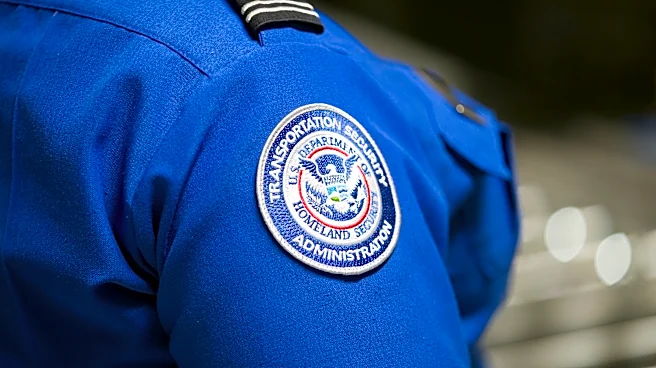









What's Happening?
Several U.S. airports are exploring the possibility of replacing Transportation Security Administration (TSA) workers with private security screening as part of a new initiative called TSA Gold+. This program is an evolution of the existing Screening
Partnership Program (SPP) and aims to enhance security, efficiency, and the overall airport experience by allowing airports to tailor screening to their specific needs. Charleston International Airport, Tampa International Airport, and Des Moines International Airport are among those considering this shift. The American Federation of Government Employees, representing over 47,000 TSA officers, has expressed concerns about the potential impact on public safety and job security. Despite these concerns, TSA assures that federal security standards will remain unchanged, and TSA personnel will continue to oversee operations at participating airports.
Why It's Important?
The move towards privatized security screening at airports could significantly impact the aviation industry and its workforce. Proponents argue that privatization offers greater flexibility and resilience, particularly during federal budget constraints or government shutdowns. It also allows for the integration of advanced screening technologies, potentially improving the passenger experience. However, the transition raises concerns about job security for TSA employees and the consistency of security standards. The union's opposition highlights the potential risks to public safety and the need for transparency and stakeholder involvement in such significant changes. The outcome of this initiative could set a precedent for how airport security is managed in the future.
What's Next?
As airports like Charleston, Tampa, and Des Moines move forward with TSA Gold+, they will need to navigate the transition carefully to ensure operational stability and maintain security standards. TSA has committed to working closely with airport partners to implement the program, offering current TSA officers the opportunity to transition to private contractors with equivalent pay and benefits. The success of this initiative will likely depend on its ability to balance innovation with security and employee welfare. Stakeholders, including Congress, local authorities, and the flying public, may seek greater involvement in the decision-making process to address concerns and ensure accountability.