





What's Happening?
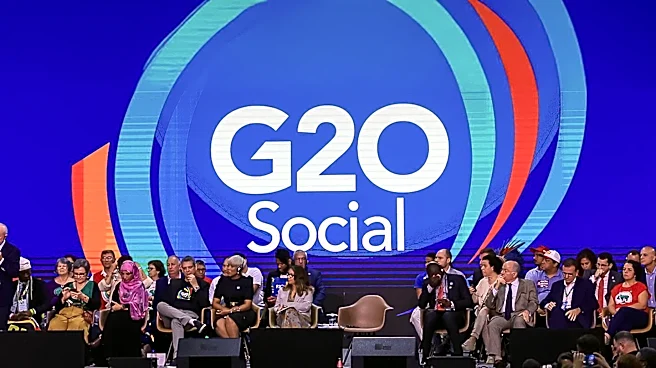
Russian Minister of Foreign Affairs Sergey Lavrov is scheduled to lead a Russian delegation to the G20 Foreign Ministers’ Meeting in Atlanta, USA, from October 30-31. This meeting is being held under the U.S. chairmanship. According to Maria Zakharova,
spokeswoman for the Russian Ministry of Foreign Affairs, a primary focus for the Russian delegation will be the reform of global economic institutions. Discussions are also expected to cover a broad spectrum of geopolitical challenges, including conflicts and confrontational trends that are impacting the world economy. Other announced topics by the American chairmanship include negative factors in commercial navigation and heightened threats to food and energy security. Zakharova noted that the Russian delegation faced difficulties in obtaining visas to the United States, with most issues being resolved at the last moment, just 24 hours before their planned departure.
Why It's Important?
The participation of Russia's Foreign Minister in a U.S.-hosted G20 meeting is significant given the current geopolitical climate and strained relations between the two countries. The G20 platform provides a rare opportunity for high-level diplomatic engagement and discussion on critical global issues, despite ongoing tensions. Russia's emphasis on reforming global economic institutions suggests a potential push for alternative economic frameworks or a challenge to existing Western-dominated structures. The discussion of geopolitical challenges, commercial navigation, and food and energy security highlights the interconnectedness of global stability and economic well-being. The reported visa difficulties underscore the diplomatic friction and logistical hurdles that can impede international cooperation, even on multilateral platforms designed to address shared global concerns. The meeting's outcomes could influence international economic policies and diplomatic relations, particularly concerning the U.S. and Russia.
What's Next?
The G20 Foreign Ministers’ Meeting will proceed in Atlanta from October 30-31, where the Russian delegation, led by Sergey Lavrov, will engage in discussions on global economic institutions, geopolitical challenges, and issues related to commercial navigation and security. The resolution of the visa issues, albeit at the last minute, indicates that the meeting will proceed as planned with Russian participation. Following the meeting, statements from the participating nations, including Russia and the U.S., will likely provide insights into the outcomes of the discussions and any areas of agreement or continued divergence. The emphasis on reforming global economic institutions could lead to further proposals or debates within international financial bodies. The discussions on food and energy security may also prompt new international initiatives or policy adjustments from member states.
Beyond the Headlines
The challenges faced by the Russian delegation in securing visas for a high-profile international meeting in the U.S. reflect deeper diplomatic tensions and the complexities of international relations. Such incidents, even if resolved, can be perceived as symbolic gestures or indicators of the state of bilateral relations. The G20, as a forum for major economies, often serves as a barometer for global cooperation and competition. Russia's focus on reforming global economic institutions could be interpreted as an attempt to reshape the international order, potentially aligning with other nations seeking to reduce the influence of Western-led financial systems. The discussions on geopolitical challenges and their impact on the world economy highlight the increasing intertwining of political stability and economic prosperity, making these diplomatic engagements crucial for navigating a complex global landscape.