








What's Happening?
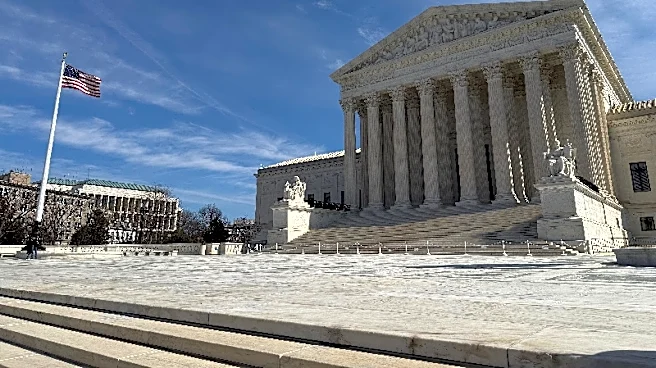
The U.S. Supreme Court has ruled in favor of First Choice Women's Resource Centers, a faith-based pregnancy center, allowing it to challenge a New Jersey state investigation in federal court. The investigation, initiated by then-Democratic Attorney General
Matthew Platkin, sought donor lists and other information to determine if the center misled individuals to discourage abortions. First Choice argued that the subpoena violated their First Amendment rights to free speech and association. The American Civil Liberties Union, despite supporting abortion rights, backed First Choice's First Amendment concerns. The Supreme Court's decision is a procedural victory, enabling First Choice to contest the subpoena in federal court. This ruling comes amid a broader national context where crisis pregnancy centers have gained prominence, especially in Republican-controlled states that have imposed abortion restrictions.
Why It's Important?
This Supreme Court decision underscores the ongoing national debate over abortion rights and the role of crisis pregnancy centers. By siding with First Choice, the court highlights the tension between state investigations and First Amendment rights. The ruling could set a precedent for similar cases, potentially affecting how states can investigate organizations that oppose abortion. This decision may embolden other anti-abortion centers to challenge state actions, impacting the regulatory landscape. It also reflects the court's conservative majority's influence on abortion-related issues, following its previous decision to overturn the nationwide right to abortion in 2022. The case illustrates the complex interplay between state powers and constitutional rights, with significant implications for both abortion access and free speech.
What's Next?
Following the Supreme Court's decision, First Choice will proceed with its lawsuit in federal court to challenge the New Jersey subpoena. The outcome of this case could influence future legal battles involving crisis pregnancy centers and state investigations. If First Choice prevails, it may deter states from pursuing similar investigations, potentially limiting oversight of these centers. Conversely, if the state ultimately succeeds, it could affirm states' abilities to scrutinize organizations that may mislead individuals about abortion services. The case may also prompt legislative responses at both state and federal levels, as stakeholders on both sides of the abortion debate seek to clarify the boundaries of permissible state actions and First Amendment protections.