



What's Happening?
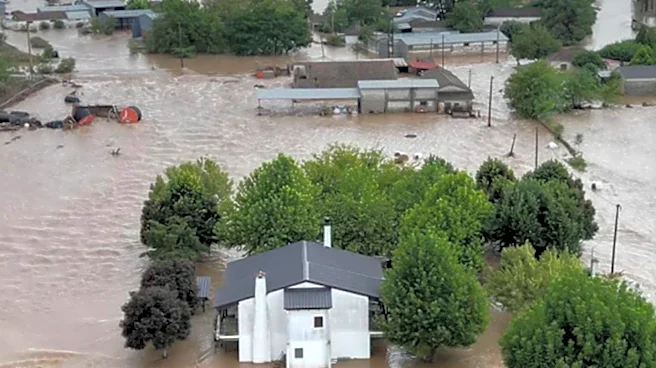
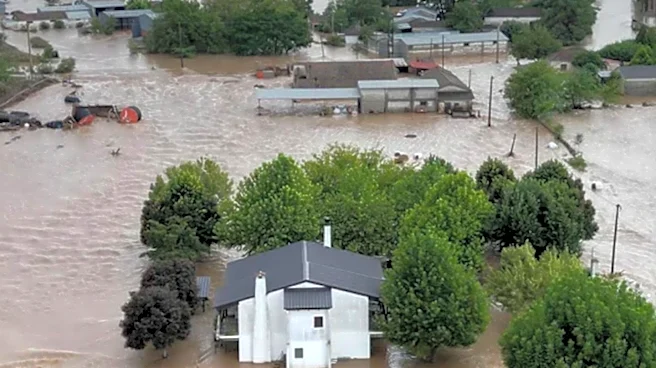
Residents in southwest Colorado are grappling with significant emotional and physical damage following two historic floods within a two-week period. Donald Kubelka, a Pagosa Springs resident, found his home inundated with thick mud and waterlogged walls,
rendering it unrecognizable and displacing his family for over two weeks. Similarly, Parris Wise, who had moved to Durango for a fresh start after Hurricane Helene destroyed her North Carolina home, is now facing another devastating loss. Her downstairs neighbors, Persephone Hammler and Lukis Wilkins, experienced a harrowing ordeal when Hammler became trapped by rising floodwaters, necessitating Wilkins to break through a wall for her rescue. These events highlight the profound and often unseen emotional and psychological impacts of climate disasters, extending beyond the immediate physical destruction.
Why It's Important?
The repeated flooding in southwest Colorado underscores the growing challenges faced by communities in regions vulnerable to climate change. The emotional and psychological toll, including trauma, grief, and uncertainty, can be as devastating as the physical damage, often leading to long-term recovery processes. Heidi Steltzer, an ecosystem ecologist and professor at Fort Lewis College, emphasizes that these events can lead to complex PTSD, particularly with multiple occurrences. The need for community spaces to process such crises is critical, as traditional American culture often lacks such outlets. The displacement and loss of homes, coupled with the emotional burden, can severely impact individuals' sense of security and well-being, necessitating comprehensive support systems that address both physical and mental health.
What's Next?
The immediate future for affected residents involves extensive cleanup and rebuilding efforts, which will require significant time, financial assistance, and community support. However, the long-term recovery will also need to address the emotional and psychological scars left by these disasters. Steltzer's initiative to open the Earth Theology Center outside Cortez aims to provide a space for people to process grief and uncertainty, suggesting a growing recognition of the need for spiritual and communal healing. Communities will likely need to re-evaluate their resilience strategies, moving beyond simply 'bouncing back' to embrace a more holistic approach that allows for grieving and reinvention. Policy discussions may also arise regarding improved infrastructure, early warning systems, and mental health resources for disaster-prone areas.
Beyond the Headlines
The experiences of residents like Kubelka, Wise, and Hammler reveal the deeper societal implications of climate change, particularly the erosion of a sense of stability and the psychological burden of repeated displacement. The concept of 'resilience' itself is being re-examined, with experts suggesting that simply 'bouncing back' may not be sufficient or healthy. Instead, there's a call for allowing communities to 'fall apart' and 'reinvent' themselves, acknowledging the profound changes wrought by such events. This shift in perspective highlights the need for a more compassionate and comprehensive approach to disaster recovery that integrates mental health support, community building, and adaptive strategies for a changing climate. The ethical dimension of climate change, particularly its disproportionate impact on vulnerable communities, also comes to the forefront, urging a re-evaluation of preventative measures and support mechanisms.