
What's Happening?
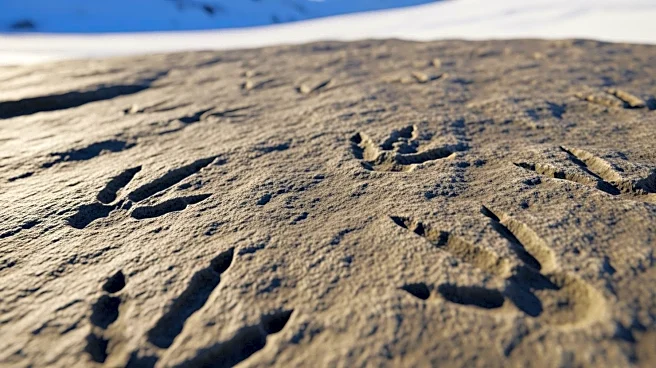
A wildlife photographer has uncovered one of the largest known collections of dinosaur footprints in the Stelvio National Park, near the 2026 Milan Cortina Winter Olympic venue of Bormio, Italy. The discovery,
announced by officials, includes an estimated 20,000 footprints dating back approximately 210 million years to the Triassic Period. These tracks were found over a five-kilometer stretch in a previously unexplored area near the Swiss border. The footprints are believed to have been made by long-necked bipedal herbivores, similar to Plateosaurus, which were up to 10 meters long and weighed up to four tons. The tracks suggest that these dinosaurs traveled in packs and sometimes stopped in circular formations, possibly for protection. The discovery was made by Elio Della Ferrera, who initially set out to photograph wildlife but noticed something unusual on a vertical rock wall.
Why It's Important?
This discovery is significant as it provides new insights into the behavior and movement patterns of dinosaurs during the Triassic Period. The sheer number of footprints and their location in a previously unexplored area offer valuable data for paleontologists studying prehistoric life. The find also highlights the potential for further paleontological discoveries in the region, which could enhance our understanding of dinosaur ecosystems and their evolution. Additionally, the proximity of the discovery to the upcoming Winter Olympics venue may increase public interest and tourism in the area, potentially benefiting local economies.
What's Next?
The discovery is likely to prompt further scientific exploration and study in the Stelvio National Park to uncover more about the dinosaurs that once roamed the area. Researchers may conduct detailed analyses of the footprints to gain deeper insights into the species' social behavior and environmental conditions of the time. The findings could also lead to increased conservation efforts to preserve the site and its historical significance. As the Winter Olympics approach, there may be opportunities to integrate this discovery into cultural and educational programs for visitors.