



What's Happening?
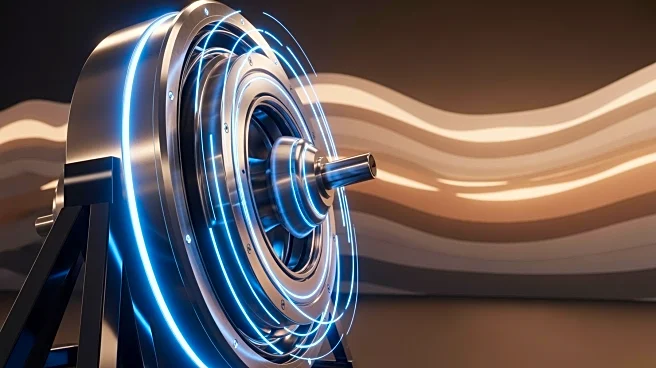
China has completed the installation of a massive hypergravity machine, known as CHIEF1900, beneath the city of Hangzhou. This machine, housed in a 230-square-meter subterranean chamber, is designed to compress geological time by subjecting physical models
to extreme centrifugal forces. The CHIEF1900 generates up to 1,900 g-tonnes of force, surpassing the previous record held by a U.S. Army Corps of Engineers machine. The facility aims to accelerate natural processes that typically take centuries, allowing researchers to observe potential failure points in infrastructure projects and study geological movements in a condensed timeframe.
Why It's Important?
The CHIEF1900 represents a significant advancement in geological and engineering research, providing a unique platform for testing the durability and resilience of large-scale infrastructure projects. By simulating extreme conditions, the machine offers insights into the long-term impacts of environmental stressors on structures like dams and railways. This capability is crucial for improving safety and efficiency in construction and engineering, potentially reducing costs and preventing catastrophic failures. The facility also positions China as a leader in hypergravity research, attracting international collaboration and investment.
What's Next?
The hypergravity lab is set to function as a global research platform, with domestic and international teams booking time on the CHIEF1900. The facility will continue to expand, with additional units under construction. Researchers plan to use the machine to explore a wide range of applications, from seismic testing to deep-sea engineering. The data collected could lead to new engineering standards and practices, influencing global infrastructure development. The success of the CHIEF1900 may also inspire similar projects worldwide, further advancing the field of hypergravity research.