





What's Happening?
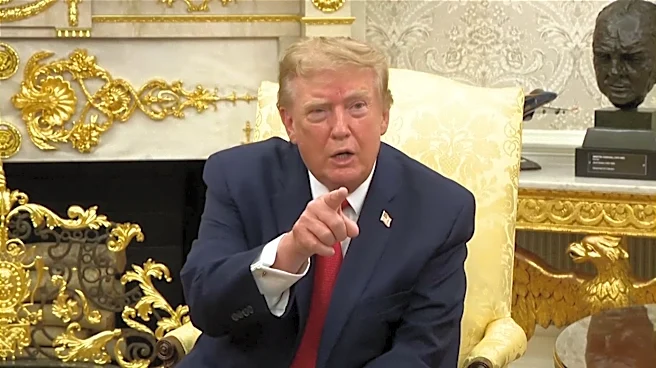
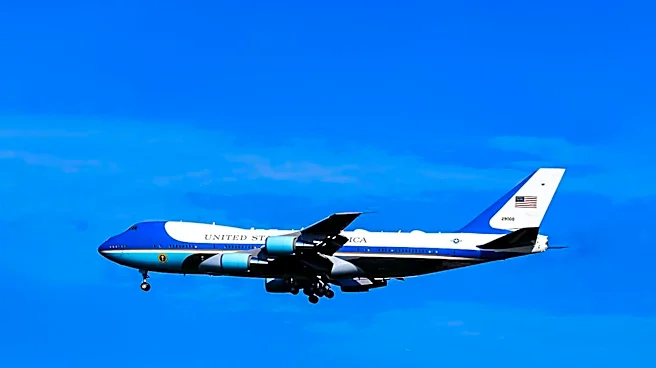
The White House press corps has expressed significant disappointment and concern following revelations that they were misled about President Trump's secret plane switch. The incident, which treated the press pool as a decoy, has led to no official press briefing
or acknowledgment from the White House regarding the deception. Journalists who were on the July 8 flight reported feeling deceived by the government, with some stating that the White House was not forthright about the operation. The White House Correspondents’ Association (WHCA) has requested a protocol for handling extraordinary security circumstances in the future, emphasizing the need for a balance between security and transparency, which reporters believe was entirely disregarded in this instance.
Why It's Important?
This incident is important because it directly impacts the credibility and operational integrity of the White House press corps, a vital component of democratic accountability. The deliberate deception of journalists undermines the public's right to information and erodes trust between the administration and the media. For reporters, it raises concerns about their safety and their ability to accurately cover the President's movements, forcing them to question the veracity of official information. The lack of a clear protocol for such situations creates a dangerous precedent, potentially normalizing a lack of transparency and making it harder for the press to fulfill its role as a watchdog. This erosion of trust can have broader implications for how the public perceives news and information emanating from the highest levels of government.
What's Next?
The White House Correspondents’ Association (WHCA) is actively working to establish a protocol with the White House for handling future security circumstances to prevent similar deceptions. The outcome of these discussions will determine whether a more transparent and trustworthy relationship can be re-established. Journalists, as noted by NYT chief White House correspondent Peter Baker, will likely adopt a more skeptical approach, reporting only what they know and being wary of assumptions, even regarding basic logistical details. This incident may also prompt media organizations to re-evaluate their internal guidelines for covering presidential movements and to advocate more forcefully for press access and transparency. The ongoing dialogue between the WHCA and the White House will be crucial in shaping future interactions and potentially setting new standards for press relations.
Beyond the Headlines
The incident of President Trump's secret plane switch and the subsequent deception of the press corps touches upon fundamental principles of press freedom and government transparency. It highlights the constant tension between national security concerns and the public's right to know, a balance that is often debated but rarely resolved to everyone's satisfaction. The comparison to the extreme secrecy surrounding Russian President Vladimir V. Putin, where journalists track his activity by assessing the wilting of office plants, underscores the potential slippery slope if transparency is consistently undermined. This event serves as a stark reminder that even in a democratic society, the media must remain vigilant against attempts to control narratives or restrict access, as such actions can gradually erode the foundations of an informed citizenry and a free press. The long-term implications could include a more adversarial relationship between the White House and the press, impacting the flow of information to the public.