
What's Happening?
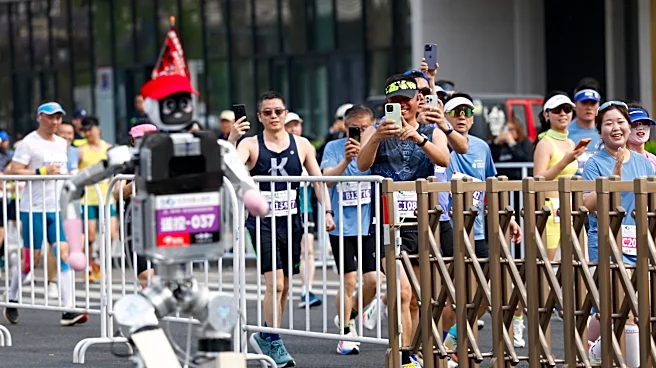
A Chinese-developed robot named Lightning has surpassed the human world record for a half-marathon during an annual race in Beijing. The robot, created by the Chinese smartphone company Honor, completed
the 13-mile race in 50 minutes and 26 seconds, significantly beating the previous human record of 57 minutes set by Uganda's Jacob Kiplimo. This event marks the second consecutive year that humanoid robots have participated in the Beijing half-marathon, showing improved performance compared to the previous year when the fastest robot took over two hours to finish. The race included dozens of robots running alongside 12,000 human participants, with some robots using autonomous navigation and others being remotely controlled. Despite some robots malfunctioning and falling during the race, the event demonstrated significant advancements in robotic technology.
Why It's Important?
The achievement of Lightning in breaking the human half-marathon record underscores the rapid advancements in robotics and artificial intelligence. This development has implications for various industries, including sports, where robots could potentially be used for training and performance analysis. The success of autonomous and remotely controlled robots in such a challenging event highlights the potential for robots to perform complex tasks, which could lead to increased automation in sectors like logistics, manufacturing, and even healthcare. However, it also raises questions about the future role of humans in activities traditionally dominated by human effort and skill, prompting discussions on the ethical and societal impacts of integrating advanced robotics into everyday life.
What's Next?
As robotic technology continues to evolve, further improvements in speed, efficiency, and autonomy are expected. Companies like Honor and Intercity Technology Co. are likely to continue refining their robotic designs to enhance performance and reliability. The success of robots in competitive events may encourage more research and development in this field, potentially leading to new applications in various industries. Additionally, regulatory bodies and policymakers may need to address the implications of robots participating in human-centric events, considering safety, fairness, and the potential need for new rules and guidelines.
Beyond the Headlines
The participation of robots in a traditionally human-dominated event like a half-marathon raises broader questions about the future of sports and competition. As robots become more capable, there may be a need to redefine what constitutes a fair competition and how to balance human and robotic participation. This development also touches on cultural and ethical considerations, such as the value placed on human achievement versus technological prowess. The integration of robots into competitive sports could lead to a reevaluation of what it means to excel in athletic endeavors and how society values different forms of achievement.