

What's Happening?
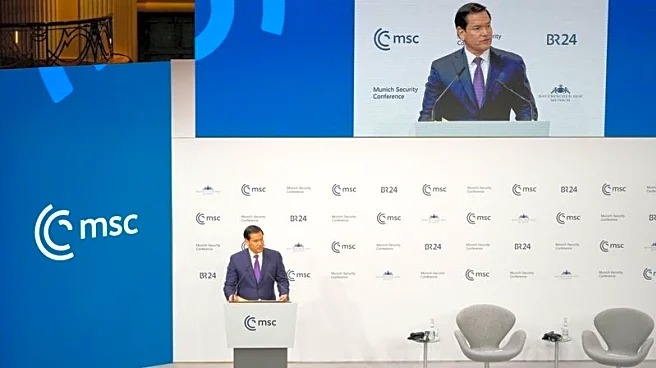
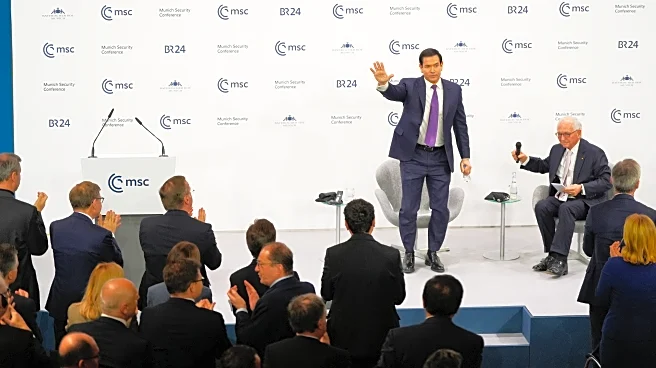
At the recent Munich Security Conference, discussions highlighted a shift in NATO's command structure, with the UK and Italy taking over certain NATO commands from the United States. This move is seen as a step towards establishing a more European-centric
defense framework within the alliance. The U.S. will continue to play a critical role, providing command, control, and specialized capabilities, including the nuclear umbrella. However, the U.S. is expected to represent a smaller portion of NATO's military capacity in the future. This development comes amid broader discussions about the U.S.'s strategic interests and its imperial vision, which some European leaders view as a potential threat to European security.
Why It's Important?
The shift in NATO's command structure signifies a potential rebalancing of military responsibilities within the alliance, with European nations taking on more leadership roles. This change could lead to a more autonomous European defense strategy, reducing reliance on the U.S. and potentially altering transatlantic relations. The move also reflects ongoing debates about the U.S.'s role in global security and its approach to international alliances. As Europe seeks to strengthen its defense capabilities, this development could impact defense spending, military collaboration, and geopolitical dynamics within the region.
What's Next?
As European nations assume greater command roles within NATO, further discussions and decisions will likely focus on the specifics of this transition and its implications for the alliance's operational effectiveness. European leaders may continue to advocate for a more independent defense strategy, potentially leading to increased defense spending and collaboration among European countries. The U.S. will need to navigate its evolving role within NATO, balancing its strategic interests with the alliance's collective security goals. The outcome of these discussions could shape the future of transatlantic relations and global security dynamics.