


What's Happening?
Repair cafes in Northern Ireland are gaining popularity as community events where volunteers fix broken items, promoting sustainability and community engagement. Originating in Amsterdam in 2009, the concept reached Northern Ireland in 2018, with the first
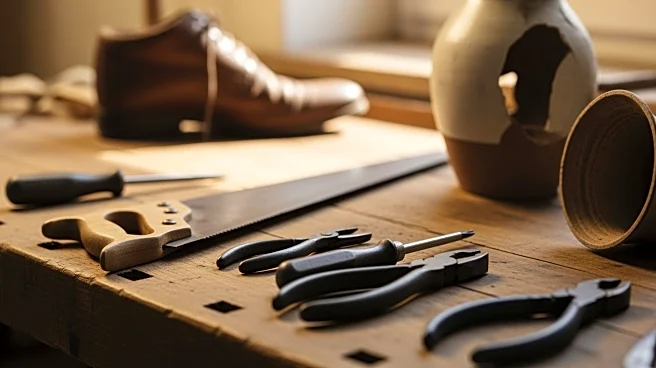
event held in South Belfast. Since then, 14 branches have opened or are set to open across the region. These cafes are part of a global network of 2,500 repair cafes. At these events, volunteers, known as 'fixers', use their skills to repair a variety of items, from clothing to household appliances, thus preventing them from ending up in landfills. The Antrim and Newtownabbey branch, for example, hosts regular pop-ups where community members bring items for repair, fostering a sense of community and environmental responsibility.
Why It's Important?
The repair cafes play a crucial role in promoting environmental sustainability by reducing waste. By repairing items instead of discarding them, these cafes help save significant amounts of goods from landfills, contributing to waste reduction efforts. The initiative also encourages a cultural shift towards valuing repair over disposal, which can have long-term environmental benefits. Additionally, these events strengthen community ties by bringing people together to share skills and resources, fostering a collaborative spirit. The success of these cafes in Northern Ireland reflects a growing awareness and commitment to sustainable practices, which could inspire similar initiatives in other regions.
What's Next?
The repair cafe movement in Northern Ireland is set to expand, with new branches planned for Aghalee and Glenravel in the Glens of Antrim. As more communities recognize the benefits of these events, the network is likely to grow, potentially leading to more widespread adoption of repair culture. This expansion could also encourage local governments and organizations to support such initiatives, further embedding sustainability into community practices. The continued success of these cafes may also inspire similar movements in other parts of the UK and beyond, contributing to a global shift towards more sustainable consumption habits.
Beyond the Headlines
Beyond the immediate environmental benefits, repair cafes also address broader cultural and economic issues. They challenge the throwaway culture prevalent in modern society, promoting a mindset of resourcefulness and conservation. Economically, they provide a cost-effective alternative to purchasing new items, which can be particularly beneficial in economically challenged areas. Culturally, they revive traditional skills and crafts, preserving knowledge that might otherwise be lost. This movement also highlights the potential for grassroots initiatives to drive significant change, demonstrating how local actions can contribute to global sustainability goals.